ChipApex | Global Electronic Components Supplier

SEARCH
Search Product
Search Post
— IC芯片 | 连接器 | 传感器 | 被动器件 —
Search productSearch post
— IC芯片 | 连接器 | 传感器 | 被动器件 —
Consult the customer manager about the wholesale price.
consultation hotline:86-132-6715-2157
email:[email protected]
Contact the product manager for consultation. One-stop consultation is available.
Do you want a lower wholesale price? Please send us your inquiry and we will reply immediately.
The LF247DT is a high-speed J-FET input quad operational amplifier manufactured by STMicroelectronics. It integrates well-matched, high-voltage J-FET and bipolar transistors within a monolithic integrated circuit structure. The device features a typical slew rate of 16V/µs, low input bias current, and low offset voltage temperature coefficient. It operates with a supply voltage range of ±22V (44V total) and consumes 1.4mA per four-channel configuration. The output current per channel is rated at 40mA. It is available in a 14-SOIC surface-mount package and functions reliably across an operating temperature range of -40°C to +105°C.
Verify the specific ordering suffix against the manufacturer's official datasheet to confirm package type and tape/reel specifications. Ensure the component matches the required industrial temperature grade and pinout configuration for your PCB layout. Cross-reference the manufacturer part number with authorized distributor listings to confirm authenticity and current product status before finalizing procurement orders.
Select this component when high-speed operation combined with low input current is required. The J-FET input stage provides high input impedance suitable for sensitive signal sources. Consider the 14-SOIC package constraints for board space. Verify that the supply voltage requirements align with the system's power rails and that the thermal management supports the specified operating temperature range.
The LF247DT belongs to the LF247 family of quad operational amplifiers from STMicroelectronics. This series is designed for applications requiring high speed and precision. The 'DT' suffix typically denotes the specific surface-mount packaging variant within the broader LF247 product line, distinguishing it from other package options like DIP or SOIC variations.
Consult official STMicroelectronics documentation for direct pin-to-pin replacements. Generic equivalents may not match the specific slew rate or input bias current characteristics. Verify compatibility with existing circuit designs before substitution.
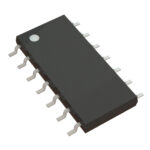 LF247DT

The activity of extra discounts on wholesale prices is in full swing…
Please fill in your contact information and we will send you the latest wholesale price list.