ChipApex | Global Electronic Components Supplier

SEARCH
Search Product
Search Post
— IC芯片 | 连接器 | 传感器 | 被动器件 —
Search productSearch post
— IC芯片 | 连接器 | 传感器 | 被动器件 —
Consult the customer manager about the wholesale price.
consultation hotline:86-132-6715-2157
email:[email protected]
Contact the product manager for consultation. One-stop consultation is available.
Do you want a lower wholesale price? Please send us your inquiry and we will reply immediately.
The LF298M-NS is a monolithic sample-and-hold circuit manufactured by National Semiconductor. It integrates a single functional unit designed for precise signal acquisition and storage in analog processing systems. The device features an acquisition time of 20 µs, a bandwidth of 1 MHz, and an input offset voltage of 1 mV. It is housed in a 14-pin SOIC package and contains one internal amplifier. This component serves as a dedicated solution for maintaining sampled voltage levels with minimal droop and aperture uncertainty.
Verify the manufacturer designation carefully, as National Semiconductor was acquired by Texas Instruments. Ensure the part number suffix matches the required package type and temperature grade. Confirm that the specific revision aligns with current design requirements, as legacy components may have updated equivalents or pin-compatible alternatives available from the successor manufacturer.
Select this component when a dedicated, single-channel sample-and-hold function is required without external discrete components. Consider the 20 µs acquisition time and 1 MHz bandwidth against system speed requirements. Evaluate the 14-pin SOIC package constraints for PCB layout. Verify compatibility with input signal ranges and output drive capabilities before finalizing the design.
The LF298 series belongs to a family of monolithic sample-and-hold circuits originally developed by National Semiconductor. These devices were widely used in analog signal processing applications before being integrated into Texas Instruments' portfolio following the acquisition. The LF298M variant represents a specific military or enhanced grade version within this lineage, distinguished by its robust construction and performance specifications.
The LF398M/NOPB is identified as a comparable alternative within the same product family. Verify pinout compatibility and electrical parameter alignment before substitution. Check for any differences in acquisition time or droop rate that might impact system performance.
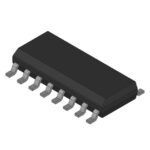 LF298M-NS

The activity of extra discounts on wholesale prices is in full swing…
Please fill in your contact information and we will send you the latest wholesale price list.