ChipApex | Global Electronic Components Supplier
SEARCH
Search Product
Search Post
— IC芯片 | 连接器 | 传感器 | 被动器件 —
Search productSearch post
— IC芯片 | 连接器 | 传感器 | 被动器件 —
Consult the customer manager about the wholesale price.
consultation hotline:86-132-6715-2157
email:[email protected]
Contact the product manager for consultation. One-stop consultation is available.
Do you want a lower wholesale price? Please send us your inquiry and we will reply immediately.
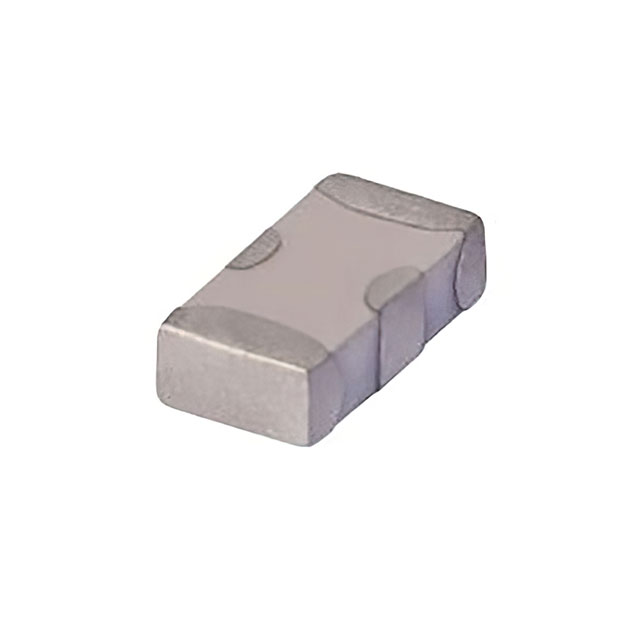
The LFCN-1200D+ is a low-pass ceramic filter from Mini-Circuits, designed for surface-mount applications. It features a cutoff frequency of 1.2GHz and operates at a system impedance of 50 Ohms. The device utilizes LTCC technology within a compact 4-SMD, no-lead package measuring 3.20mm x 1.60mm x 0.94mm. A key electrical characteristic is its DC pass capability, providing greater than 100 MOhm isolation to ground, which distinguishes it from standard variants in the LFCN series.
Verify the specific suffix 'D' when ordering to ensure DC pass functionality is required, as standard LFCN-1200+ models do not support DC continuity. Confirm package compatibility with PCB land patterns prior to integration. Check current RoHS compliance status and moisture sensitivity levels during procurement planning to ensure storage and handling requirements are met for the component.
Select this component when both low-pass filtering characteristics and DC signal transmission are necessary within the same circuit node. The high isolation to ground prevents unwanted grounding of DC bias lines while maintaining RF attenuation above the cutoff frequency. Consider the physical dimensions and thermal properties of the LTCC substrate during layout design to ensure reliable soldering and mechanical stability.
This part belongs to the LFCN series of LTCC low-pass filters manufactured by Mini-Circuits. The series offers various cutoff frequencies tailored for different RF applications. The 'D' suffix specifically denotes the variant engineered for DC pass operation, offering an alternative to standard versions that block DC signals. This family is widely used in wireless infrastructure and test equipment.
The standard LFCN-1200+ serves as a direct physical replacement but lacks DC pass capability. If DC continuity is not required, the non-D version may be substituted. Ensure any substitute maintains the 50 Ohm impedance and similar insertion loss specifications to preserve circuit performance without redesigning the surrounding RF network.
 LFCN-1200D+
The activity of extra discounts on wholesale prices is in full swing…
Please fill in your contact information and we will send you the latest wholesale price list.