ChipApex | Global Electronic Components Supplier
SEARCH
Search Product
Search Post
— IC芯片 | 连接器 | 传感器 | 被动器件 —
Search productSearch post
— IC芯片 | 连接器 | 传感器 | 被动器件 —
Consult the customer manager about the wholesale price.
consultation hotline:86-132-6715-2157
email:[email protected]
Contact the product manager for consultation. One-stop consultation is available.
Do you want a lower wholesale price? Please send us your inquiry and we will reply immediately.
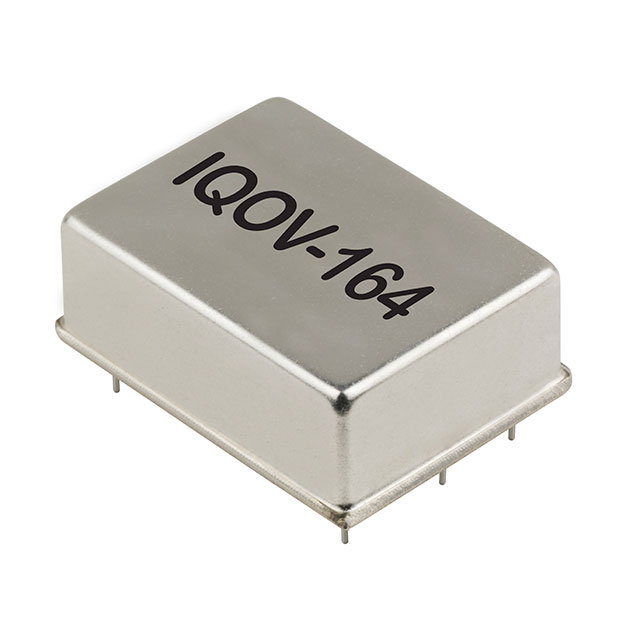
The LFOCXO063816BULK is a high-performance Oven-Controlled Crystal Oscillator (OCXO) manufactured by IQD Frequency Products. It operates at a nominal frequency of 12.8 MHz with an initial frequency stability of 20 ppb and aging rates between 3 ppb to 8 ppb. The device utilizes HCMOS output format and requires a single 3.3 V supply voltage. Designed for surface-mount technology, it functions within an extended industrial temperature range from -40°C to +85°C. The component features a compact SMD/SMT termination style suitable for automated assembly processes.
Verify the specific ordering suffix and packaging configuration against official IQD documentation before procurement. Confirm that the required frequency stability and aging specifications align with system requirements. Ensure compatibility with the 3.3 V supply voltage and HCMOS interface levels. Check for any RoHS compliance details or environmental restrictions relevant to the target market. Validate the surface-mount footprint dimensions for PCB layout accuracy.
Select this OCXO when superior long-term stability and low phase noise are critical compared to standard TCXOs or SPXOs. The 12.8 MHz frequency is commonly used in digital signal processing and telecommunications applications. Consider the thermal management requirements inherent to oven-controlled designs despite the low power consumption. Evaluate the trade-off between the high performance and the physical size constraints of the SMD package.
This component belongs to the LFOCXO series of Oven-Controlled Crystal Oscillators from IQD Frequency Products. The series is designed for applications demanding exceptional frequency accuracy over time and temperature variations. IQD provides these oscillators as part of their comprehensive portfolio of frequency control solutions, catering to industries where signal integrity is paramount.
The product status is listed as discontinued. Engineers must identify alternative OCXOs with matching 12.8 MHz frequency, 3.3 V operation, and similar stability metrics. Verify pinout compatibility and mechanical footprint dimensions to ensure seamless integration into existing hardware designs without significant redesign efforts.
 LFOCXO063816BULK
The activity of extra discounts on wholesale prices is in full swing…
Please fill in your contact information and we will send you the latest wholesale price list.