ChipApex | Global Electronic Components Supplier

SEARCH
Search Product
Search Post
— IC芯片 | 连接器 | 传感器 | 被动器件 —
Search productSearch post
— IC芯片 | 连接器 | 传感器 | 被动器件 —
Consult the customer manager about the wholesale price.
consultation hotline:86-132-6715-2157
email:[email protected]
Contact the product manager for consultation. One-stop consultation is available.
Do you want a lower wholesale price? Please send us your inquiry and we will reply immediately.
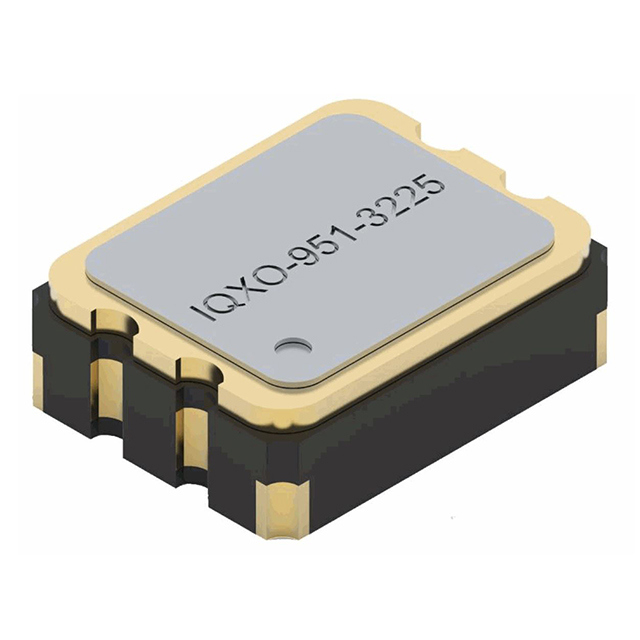
The LFSPXO083820 is a standard clock oscillator manufactured by IQD Frequency Products, designed for surface-mount applications. It operates at a nominal frequency of 25 MHz with a CMOS output format. The device supports a supply voltage range from 1.62 V to 3.63 V and features a maximum supply current of 12 mA. It offers a frequency stability of ±25 ppm and functions within an operating temperature range of -40°C to +85°C. The component is housed in a compact 4-SMD, No Lead package.
Verify the specific frequency tolerance and operating temperature range requirements against the application design specifications before procurement. Confirm that the supply voltage limits align with the target system power rails. Ensure the surface-mount footprint matches the PCB layout guidelines provided in the official datasheet to guarantee proper soldering and mechanical stability during operation.
Select this oscillator when a fixed 25 MHz timing source is required with moderate stability needs. The CMOS output simplifies integration with standard digital circuits without additional buffering. Consider the low voltage operation capability if the design utilizes lower power supply domains. The wide industrial temperature range ensures reliability across diverse environmental conditions compared to commercial grade alternatives.
This component belongs to the LFSPXO series of standard quartz crystal oscillators from IQD Frequency Products. The series provides reliable clock signals for various electronic applications requiring precise timing. The LFSPXO083820 specifically targets designs needing a 25 MHz reference with CMOS compatibility and robust performance across industrial temperature ranges.
The LFSPXO083820 may be replaced by other 25 MHz CMOS oscillators with compatible voltage and package specifications. Verify pinout compatibility and electrical parameters such as load capacitance and drive strength when substituting. Ensure the replacement part meets the same frequency stability and temperature range requirements.
 LFSPXO083820

The activity of extra discounts on wholesale prices is in full swing…
Please fill in your contact information and we will send you the latest wholesale price list.