ChipApex | Global Electronic Components Supplier

SEARCH
Search Product
Search Post
— IC芯片 | 连接器 | 传感器 | 被动器件 —
Search productSearch post
— IC芯片 | 连接器 | 传感器 | 被动器件 —
Consult the customer manager about the wholesale price.
consultation hotline:86-132-6715-2157
email:[email protected]
Contact the product manager for consultation. One-stop consultation is available.
Do you want a lower wholesale price? Please send us your inquiry and we will reply immediately.
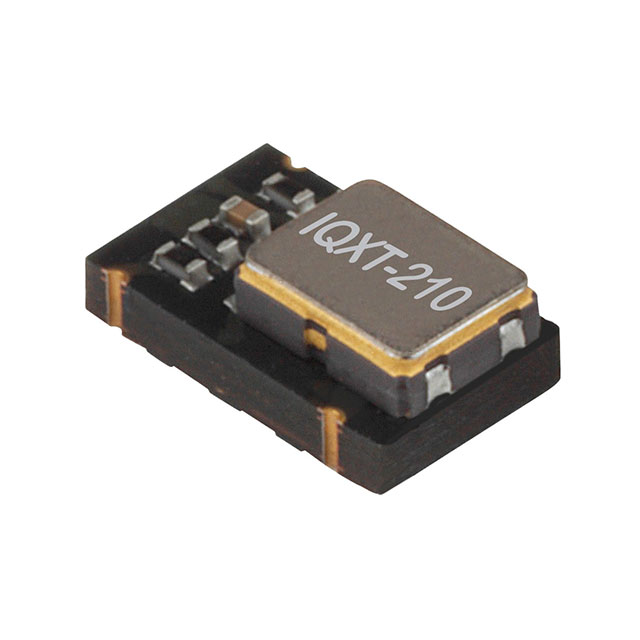
LFTCXO082851BULK is a surface-mount temperature-compensated crystal oscillator (TCXO) manufactured by IQD Frequency Products. It operates at a nominal frequency of 10 MHz with an HCMOS output type and a supply voltage of 3.3V. The device features a frequency stability of ±140ppb and operates within a temperature range of -40°C to +85°C. It consumes a maximum supply current of 10mA. The component is housed in an 8-SMD, no-lead package measuring 5.00mm x 3.20mm x 2.20mm.
Verify the specific frequency tolerance and aging specifications against the official IQD datasheet for LFTCXO082851BULK prior to procurement. Ensure the selected variant matches the required operating temperature range and supply voltage constraints. Confirm package dimensions and pinout compatibility with the target PCB layout. Cross-reference RoHS compliance status if environmental regulations apply to the final assembly.
Select this component when high frequency stability is required in space-constrained designs. The 8-SMD no-lead package facilitates automated surface-mount assembly. Consider the ±140ppb stability metric for precision timing applications. Evaluate the 10mA current draw against system power budgets. Verify that the 3.3V supply voltage aligns with the host circuit's logic levels and power distribution network.
The LFTCXO series represents IQD Frequency Products' line of surface-mount temperature-compensated oscillators. These components are designed for applications requiring precise timing in compact form factors. The manufacturer utilizes advanced compensation techniques to maintain frequency accuracy over wide temperature variations. This specific model belongs to a family of oscillators optimized for mobile and industrial electronics.
Consult official substitution lists from IQD Frequency Products for verified alternatives. Ensure any replacement part matches the 10MHz frequency, HCMOS output, and 8-SMD package dimensions. Verify identical electrical characteristics including supply voltage and stability metrics before implementation.
 LFTCXO082851BULK

The activity of extra discounts on wholesale prices is in full swing…
Please fill in your contact information and we will send you the latest wholesale price list.