ChipApex | Global Electronic Components Supplier

SEARCH
Search Product
Search Post
— IC芯片 | 连接器 | 传感器 | 被动器件 —
Search productSearch post
— IC芯片 | 连接器 | 传感器 | 被动器件 —
Consult the customer manager about the wholesale price.
consultation hotline:86-132-6715-2157
email:[email protected]
Contact the product manager for consultation. One-stop consultation is available.
Do you want a lower wholesale price? Please send us your inquiry and we will reply immediately.
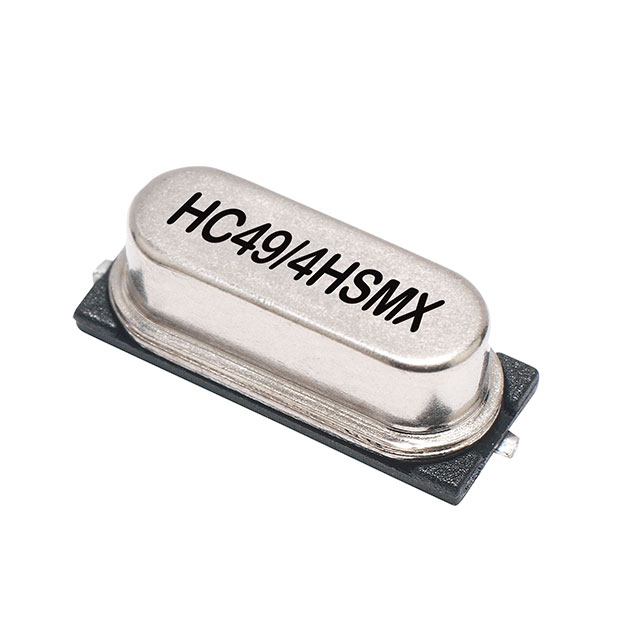
The IQD Frequency Products LFXTAL003210 is a surface-mount AT-cut quartz crystal operating at a nominal frequency of 12 MHz. It utilizes the HC49/4HSMX package with a maximum height of 3.1 mm and features gull-wing leads for reliable SMT assembly. The component offers a frequency tolerance of ±30 ppm at 25°C and stability of ±50 ppm across the -10°C to +60°C temperature range. Key electrical parameters include a load capacitance (CL) of 16 pF, a maximum equivalent series resistance (ESR) of 40 Ohms, and a maximum drive level of 500 µW. The unit exhibits a typical annual aging rate of ±5 ppm.
Verify that the specific ordering suffix matches the required packaging format, as standard packaging may vary between bulk and tape-and-reel configurations depending on the supplier. Confirm RoHS compliance status through official manufacturer documentation prior to finalizing procurement orders. Ensure the selected variant aligns with the intended thermal environment and mechanical constraints of the target application.
Select this component when a 12 MHz surface-mount crystal is required for commercial-grade applications operating within the -10°C to +60°C range. The 16 pF load capacitance must be matched with appropriate external capacitors in the circuit design to maintain frequency accuracy. This part is suitable for designs where moderate frequency stability is sufficient and space constraints favor the compact HC49/4HSMX footprint over larger through-hole alternatives.
This device belongs to the HC49/4HSMX series of surface-mount crystals manufactured by IQD Frequency Products. It serves as a direct surface-mount alternative to traditional through-hole HC-49/U crystals, offering similar electrical performance in a smaller form factor. The series is designed for general-purpose timing applications requiring reliable frequency control without the complexity of active oscillator circuits.
Cross-reference with other manufacturers' 12 MHz HC49/4HSMX crystals having 16 pF load capacitance and comparable ESR limits. Verify pin compatibility and dimensional tolerances before substituting to ensure proper solder joint formation and mechanical fit within the designated PCB area.
 LFXTAL003210

The activity of extra discounts on wholesale prices is in full swing…
Please fill in your contact information and we will send you the latest wholesale price list.