ChipApex | Global Electronic Components Supplier
SEARCH
Search Product
Search Post
— IC芯片 | 连接器 | 传感器 | 被动器件 —
Search productSearch post
— IC芯片 | 连接器 | 传感器 | 被动器件 —
Consult the customer manager about the wholesale price.
consultation hotline:86-132-6715-2157
email:[email protected]
Contact the product manager for consultation. One-stop consultation is available.
Do you want a lower wholesale price? Please send us your inquiry and we will reply immediately.
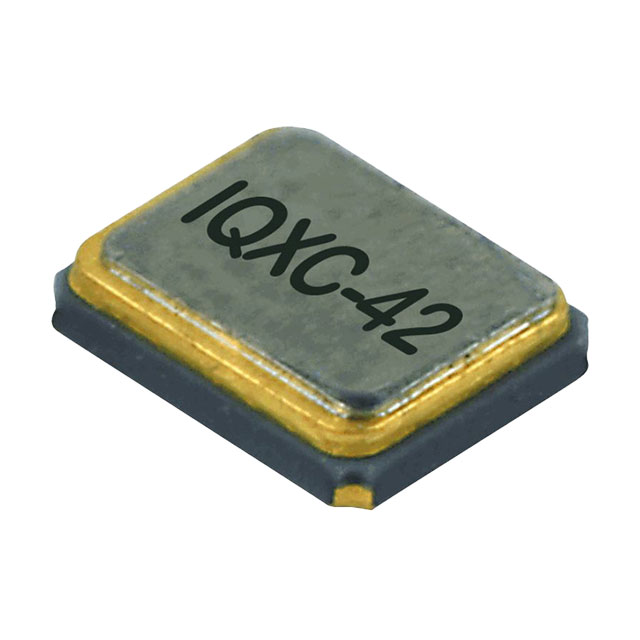
The LFXTAL085848 is a surface-mount quartz crystal resonator manufactured by IQD Frequency Products. It operates at a fundamental frequency of 27 MHz with a frequency tolerance of ±10 ppm and a load capacitance of 10 pF. The component features an equivalent series resistance (ESR) of 100 Ohms and supports an excitation level of 100 uW. It is housed in a 4-SMD, no-lead package with dimensions of 3.2 mm x 2.5 mm. The device is rated for an operating temperature range from -40°C to +125°C, ensuring reliability in demanding environments.
Verify the specific package variant and reel quantity requirements against project specifications before ordering. Confirm that the 100 uW excitation level aligns with the target oscillator circuit design to prevent overdriving the crystal. Ensure compatibility with standard reflow soldering profiles for SMD components. Check for any RoHS compliance documentation if required by regulatory standards in the destination market.
Select this component when a 27 MHz frequency is specifically required for the application. The 10 pF load capacitance must match the external capacitors used in the oscillator circuit to maintain accuracy. Consider the 100 Ohm ESR value when designing the drive level constraints. The wide temperature range makes it suitable for applications exposed to thermal fluctuations beyond standard commercial limits.
This part belongs to the IQD Frequency Products quartz crystal portfolio, which includes various frequencies and packages. IQD is a subsidiary of Würth Elektronik eiSos, providing timing solutions for global markets. The LFXTAL series typically covers standard commercial and industrial grades, offering reliable performance for general-purpose timing applications in consumer and industrial electronics.
Direct substitutes may include other 27 MHz crystals with identical 10 pF load capacitance and similar physical footprint. Verify that alternative parts meet the same -40°C to +125°C temperature rating and 100 uW excitation limit. Cross-reference ESR values to ensure circuit stability is maintained during replacement.
 LFXTAL085848
The activity of extra discounts on wholesale prices is in full swing…
Please fill in your contact information and we will send you the latest wholesale price list.