ChipApex | Global Electronic Components Supplier

SEARCH
Search Product
Search Post
— IC芯片 | 连接器 | 传感器 | 被动器件 —
Search productSearch post
— IC芯片 | 连接器 | 传感器 | 被动器件 —
Consult the customer manager about the wholesale price.
consultation hotline:86-132-6715-2157
email:[email protected]
Contact the product manager for consultation. One-stop consultation is available.
Do you want a lower wholesale price? Please send us your inquiry and we will reply immediately.
The LIA136 is a low voltage optically isolated error amplifier integrating a precision shunt reference, error amplifier, and NPN phototransistor. It operates with an input voltage range of 1.6V to 10V over temperatures from -40°C to +110°C. The device features a 1.299V reference voltage with ±1.5% accuracy across the full temperature range. Key electrical characteristics include a current transfer ratio (CTR) of 500% to 2000%, a bandwidth of 10 kHz, and a common mode transient immunity of 20 V/ns. The collector dark current is minimized at high temperatures compared to the LIA135 variant.
Verify the specific package type required for the application, as the LIA136 is available in 8-pin DIP, surface mount tube, and tape & reel configurations. Confirm that the operating temperature range up to +110°C aligns with system thermal requirements. Ensure proper handling procedures are followed due to ESD sensitivity and verify moisture sensitivity level compliance during assembly.
Select the LIA136 over the LIA135 when operation at elevated temperatures up to +110°C is required or when higher common mode transient immunity is necessary. The accessible base pin allows for external components to further reduce dark current and improve noise immunity. Ensure the minimum input voltage of 1.6V is supported by the secondary side supply rail.
The LIA136 belongs to the LIA135/LIA136 family of low voltage optically isolated error amplifiers manufactured by IXYS Integrated Circuits Division. These devices serve as functional equivalents to discrete precision shunt regulators combined with optocouplers, such as the 431 type, but offer integrated compensation and lower voltage operation capabilities within a compact 8-pin package.
The LIA135 is the primary related part number within the same series, differing primarily in temperature rating and CMTI specifications. No other public substitute part numbers are documented in the official datasheet.
Pin 2 provides access to the base of the output NPN phototransistor. This allows users to connect external resistors or capacitors to extend the operational temperature range by reducing dark current and to enhance immunity to common mode transients.
The device is designed to operate with an input voltage as low as 1.6V. Power for the internal error amplifier, reference, and LED is supplied via the LED pin, allowing it to be biased directly from low voltage rectified secondary outputs without auxiliary windings.
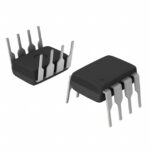 LIA136

The activity of extra discounts on wholesale prices is in full swing…
Please fill in your contact information and we will send you the latest wholesale price list.