 ChipApex | Global Electronic Components Supplier
SEARCH
Search Product
Search Post
— IC芯片 | 连接器 | 传感器 | 被动器件 —
Search productSearch post
— IC芯片 | 连接器 | 传感器 | 被动器件 —
Consult the customer manager about the wholesale price.
consultation hotline:86-132-6715-2157
email:[email protected]
Contact the product manager for consultation. One-stop consultation is available.
Do you want a lower wholesale price? Please send us your inquiry and we will reply immediately.
The LM1084IS-ADJ/NOPB is a positive adjustable low-dropout linear regulator manufactured by Texas Instruments. It provides up to 5A output current with a maximum dropout voltage of 1.5V at full load. The device supports an input voltage range up to 29V and delivers an adjustable output voltage from 1.25V to 27.5V. Key electrical specifications include a typical quiescent current of 5mA to 10mA, a power dissipation rating of 30W, and a PSRR of 75dB at 120Hz. It operates within an industrial temperature range of -40°C to +125°C and features built-in thermal shutdown and current limiting protection.
Verify the specific suffix (e.g., NOPB) to confirm lead-free compliance and packaging type. Ensure the TO-263 package variant matches your PCB footprint requirements. Confirm that the thermal management solution meets the 30W dissipation needs under your specific operating conditions. Check for moisture sensitivity levels if storage duration exceeds factory limits.
Choose this component when high current delivery is required alongside low noise and simple circuit topology. It serves as a direct pin-compatible alternative to older standards like the LM317 but with superior current handling. Consider the thermal resistance of the TO-263 package and ensure adequate heatsinking for high differential voltage scenarios to prevent thermal throttling.
This part belongs to the LM1084 family of 5A low-dropout regulators. It shares architectural similarities with other TI LDOs but is distinct in its specific current rating and package options. The series includes fixed voltage variants and different package styles such as TO-220 and SOT-223, catering to diverse thermal and spatial constraints in power supply designs.
LM1084ISX-ADJ/NOPB
The output voltage is set using two external resistors connected to the adjust pin, allowing for a programmable range typically starting from 1.25V.
The device includes internal current limiting and thermal shutdown circuits to protect against overload conditions and excessive heat generation.
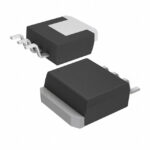 LM1084IS-ADJ
The activity of extra discounts on wholesale prices is in full swing…
Please fill in your contact information and we will send you the latest wholesale price list.




