ChipApex | Global Electronic Components Supplier
SEARCH
Search Product
Search Post
— IC芯片 | 连接器 | 传感器 | 被动器件 —
Search productSearch post
— IC芯片 | 连接器 | 传感器 | 被动器件 —
Consult the customer manager about the wholesale price.
consultation hotline:86-132-6715-2157
email:[email protected]
Contact the product manager for consultation. One-stop consultation is available.
Do you want a lower wholesale price? Please send us your inquiry and we will reply immediately.
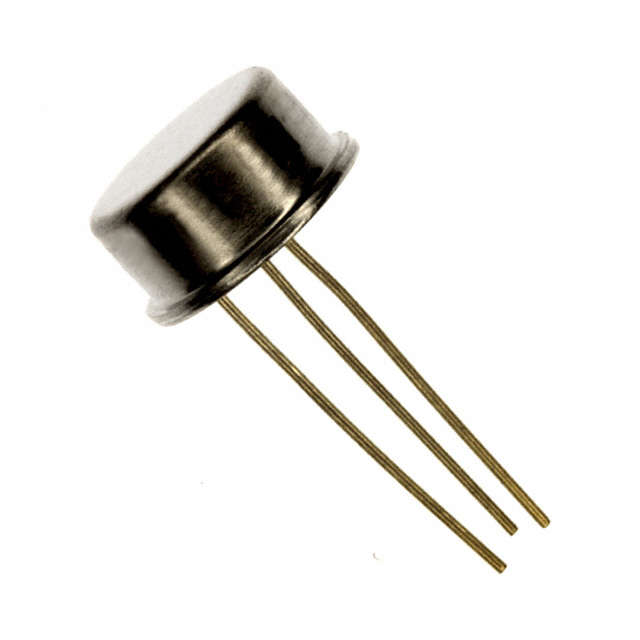
The LM120H-5.0/NOPB is an extended temperature, fixed-output negative voltage regulator from Texas Instruments. It provides a stable -5 V output with a maximum load current of 1 A. The device operates within an input voltage range up to -25 V and features a quiescent current of 2 mA. It is housed in a 3-pin TO-CAN (NDT) package designed for surface-mount or through-hole integration. The component supports an extended operating temperature range from -55°C to +150°C, ensuring reliability in harsh environments.
Verify the specific suffix 'H' confirms the extended temperature grade (-55°C to +150°C) and 'NOPB' indicates lead-free/RoHS compliance. Ensure the ordering part number matches the exact package style (TO-CAN/NDT) required for your PCB footprint. Cross-reference the manufacturer's latest datasheet revision to confirm pinout compatibility and electrical specifications before finalizing procurement.
Select this component when a reliable negative voltage rail is needed for analog circuits or op-amp biasing in high-temperature environments. It serves as a direct replacement for standard LM120 variants where extended thermal performance is critical. Consider the 1 A current limit and input voltage headroom requirements to ensure efficient operation without excessive heat dissipation in the TO-CAN package.
The LM120 series comprises 3-terminal negative regulators widely used in power management applications. The LM120H variant specifically targets demanding conditions with its extended temperature rating. As part of Texas Instruments' legacy linear regulator portfolio, it offers a robust solution for generating stable negative voltages in systems requiring high reliability and simple implementation.
Public confirmed substitutes include LM120K-5.0/NOPB for commercial temperature grades and LM145 for higher current requirements. Verify that alternative parts match the -5 V output and TO-CAN package dimensions. Check if the substitute supports the required -55°C to +150°C range if operating in extreme environments.
The maximum input voltage is -25 V. The device regulates negative voltages, so the input must be more negative than the -5 V output.
Yes, the device incorporates internal thermal overload and short-circuit protection to safeguard against damage during fault conditions.
 LM120H-5.0/NOPB
The activity of extra discounts on wholesale prices is in full swing…
Please fill in your contact information and we will send you the latest wholesale price list.