ChipApex | Global Electronic Components Supplier

SEARCH
Search Product
Search Post
— IC芯片 | 连接器 | 传感器 | 被动器件 —
Search productSearch post
— IC芯片 | 连接器 | 传感器 | 被动器件 —
Consult the customer manager about the wholesale price.
consultation hotline:86-132-6715-2157
email:[email protected]
Contact the product manager for consultation. One-stop consultation is available.
Do you want a lower wholesale price? Please send us your inquiry and we will reply immediately.
The LM124AWB is a low-power quad operational amplifier manufactured by Texas Instruments. It consists of four independent, high-gain operational amplifiers with internal frequency compensation. The device operates from a single power supply over a wide voltage range or split supplies. Key electrical characteristics include a gain-bandwidth product of 1.2 MHz, a slew rate of 500 mV/us, and an input bias current of 10 nA. It supports a maximum supply voltage of 32 V and functions within a temperature range of -55°C to 125°C.
Verify the specific suffix AWB against official Texas Instruments documentation to confirm package type and material compliance. Ensure the source document is the complete manufacturer datasheet rather than a distributor summary. Confirm that the ordering part number matches the exact electrical grade and temperature rating required for the application environment.
Select this component when low quiescent current is critical alongside multi-channel amplification needs. Compare the 1.2 MHz bandwidth and 500 mV/us slew rate against application speed requirements. Evaluate the 10 nA input bias current suitability for high-impedance sources. Verify that the ceramic flatpack package meets thermal and mechanical constraints.
The LM124 series belongs to Texas Instruments' family of low-power quad operational amplifiers. It shares architectural similarities with the LM224 and LM324 but offers military-grade temperature specifications. The AWB suffix typically denotes a specific ceramic flatpack variant designed for high-reliability applications requiring robust packaging.
Official substitutes include other members of the LM124 family such as LM124AJ or LM124J if package compatibility allows. Verify pinout and electrical parameters match exactly before substitution. Consult the latest TI interchangeability guide for qualified alternatives.
No, the LM124AWB does not feature rail-to-rail output. The output swing typically extends to within approximately 1 V of the positive supply rail and can reach the negative rail.
The input common-mode voltage range includes ground and extends to the negative supply rail. It generally operates within the full supply voltage range depending on the specific supply configuration.
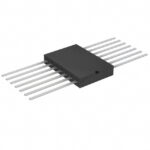 LM124AWB

The activity of extra discounts on wholesale prices is in full swing…
Please fill in your contact information and we will send you the latest wholesale price list.