 ChipApex | Global Electronic Components Supplier
SEARCH
Search Product
Search Post
— IC芯片 | 连接器 | 传感器 | 被动器件 —
Search productSearch post
— IC芯片 | 连接器 | 传感器 | 被动器件 —
Consult the customer manager about the wholesale price.
consultation hotline:86-132-6715-2157
email:[email protected]
Contact the product manager for consultation. One-stop consultation is available.
Do you want a lower wholesale price? Please send us your inquiry and we will reply immediately.
The LM136AH-2.5/883 is a precision shunt voltage reference diode manufactured by Texas Instruments, designed for high-reliability applications under MIL-PRF-38534 specifications. It provides a stable 2.5V output with an initial accuracy of 0.2% and a temperature coefficient of 15 ppm/°C. The device operates within a junction temperature range of -55°C to +125°C and supports a maximum shunt current of 20 mA. Packaged in the TO-5 metal can configuration (883), it ensures robust performance in demanding environments requiring strict voltage regulation and low drift characteristics.
Verify that the supplier provides full traceability documentation including the Certificate of Conformance (CofC) and test reports mandated by MIL-PRF-38534. Confirm the presence of the specific '883' suffix indicating compliance with the microcircuit family standard. Ensure the lot traceability matches the required military qualification levels before finalizing procurement to guarantee authenticity and performance integrity.
Select this component when application requirements demand military-grade reliability and superior voltage stability compared to commercial equivalents. The TO-5 package offers better thermal dissipation and physical robustness than plastic packages. Consider the higher cost associated with hermetic sealing and rigorous testing protocols inherent to the 883 specification when evaluating system budget constraints against performance needs.
This part belongs to the LM136 series of precision shunt voltage references, which are widely used as benchmark components in analog circuit design. The 'A' designation typically denotes tighter tolerance grades, while the '/883' suffix explicitly identifies adherence to the Military Microcircuit Device specification. This lineage ensures compatibility with legacy military designs while providing modern manufacturing quality controls.
Direct replacements include LM136AJ-2.5/883 or LM136H-2.5/NOPB if military qualification is not strictly required. Verify pinout compatibility and thermal resistance differences when substituting non-hermetic packages. Ensure that any alternative meets or exceeds the original temperature coefficient and accuracy specifications for critical reference applications.
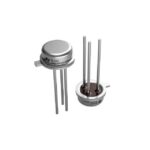 LM136AH-2.5/883
The activity of extra discounts on wholesale prices is in full swing…
Please fill in your contact information and we will send you the latest wholesale price list.






