 ChipApex | Global Electronic Components Supplier
SEARCH
Search Product
Search Post
— IC芯片 | 连接器 | 传感器 | 被动器件 —
Search productSearch post
— IC芯片 | 连接器 | 传感器 | 被动器件 —
Consult the customer manager about the wholesale price.
consultation hotline:86-132-6715-2157
email:[email protected]
Contact the product manager for consultation. One-stop consultation is available.
Do you want a lower wholesale price? Please send us your inquiry and we will reply immediately.
The LM140LAH-15 is a three-terminal positive voltage regulator manufactured by National Semiconductor. It provides a fixed output voltage of 15V with a maximum load current capability of 1.0A. The device utilizes an internal thermal overload protection mechanism to ensure reliability under fault conditions. It is housed in a ceramic dual-in-line package (CDIP) designed for high-reliability applications, featuring glass-sealed construction to withstand harsh environments and maintain performance stability over extended operational periods.
Verify the manufacturer origin, as Texas Instruments acquired National Semiconductor. Confirm the specific suffix 'LAH' corresponds to the intended ceramic package and military-grade qualification level. Ensure the part number matches the exact voltage rating and current specifications required for the design. Cross-reference datasheets from both National Semiconductor archives and Texas Instruments to confirm pinout and electrical characteristics remain consistent across legacy documentation.
Select this component when a fixed 15V supply is needed with 1A current capability in a ruggedized form factor. The ceramic package offers superior environmental sealing compared to plastic alternatives. Consider the thermal management requirements given the linear regulation topology. Verify that the input voltage range supports the necessary dropout voltage for stable operation at the desired load current.
The LM140 series belongs to a family of three-terminal positive regulators known for their simplicity and robustness. The LM140LAH-15 specifically denotes the 15V variant within the high-reliability line. These regulators are widely used in applications where long-term stability and resistance to environmental stressors are critical, serving as a foundational power management solution in specialized electronic systems.
LM340L-15: A similar three-terminal positive regulator offering 15V output. Verify package compatibility and current handling capabilities before substitution.
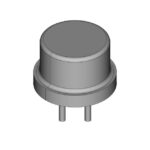 LM140LAH-15
The activity of extra discounts on wholesale prices is in full swing…
Please fill in your contact information and we will send you the latest wholesale price list.




