 ChipApex | Global Electronic Components Supplier

SEARCH
Search Product
Search Post
— IC芯片 | 连接器 | 传感器 | 被动器件 —
Search productSearch post
— IC芯片 | 连接器 | 传感器 | 被动器件 —
Consult the customer manager about the wholesale price.
consultation hotline:86-132-6715-2157
email:[email protected]
Contact the product manager for consultation. One-stop consultation is available.
Do you want a lower wholesale price? Please send us your inquiry and we will reply immediately.
The LM2703MFX-ADJ/NOPB is a micropower step-up DC/DC converter manufactured by Texas Instruments. It features an adjustable output voltage configuration with a peak current limit of 350 mA. The device operates within an input voltage range of 2.2 V to 7 V and delivers a single non-isolated positive output. Designed for surface-mount applications, it utilizes the SOT-23-5 package. The component supports a wide operating temperature range from -40°C to +125°C and complies with RoHS standards.
Verify that the ordering suffix /NOPB confirms lead-free and RoHS compliance status as specified by Texas Instruments. Ensure the SOT-23-5 package variant matches the required footprint for PCB layout. Confirm the ADJ designation aligns with the need for adjustable output voltage rather than fixed options. Cross-reference the manufacturer part number against official TI databases to validate authenticity and revision history before procurement.
Select this component when designing circuits that require efficient voltage boosting from low-voltage sources such as single-cell batteries. The 350 mA peak current limit defines the maximum load capability, making it suitable for moderate power applications. Consider the SOT-23-5 package size for tight spatial constraints. Evaluate the input voltage range of 2.2 V to 7 V to ensure compatibility with the source supply under all operating conditions.
This device belongs to the LM2703 series of micropower step-up converters from Texas Instruments. It is functionally related to other variants like the LM2703MF-ADJ/NOPB and evaluation boards such as the LM2703EV. The series is characterized by its compact packaging and suitability for battery-operated applications where efficiency and size are critical design factors.
Direct substitutes include the LM2703MF-ADJ/NOPB which shares identical electrical characteristics and pinout. Other family members like the LM2704 (550 mA) or LM2705 (150 mA) offer different current limits but maintain similar functionality. Verify package compatibility and thermal requirements when considering alternative current-rated variants within the same product line.
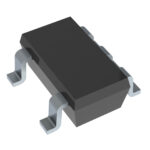 LM2703MFX-ADJ/NOPB

The activity of extra discounts on wholesale prices is in full swing…
Please fill in your contact information and we will send you the latest wholesale price list.





