 ChipApex | Global Electronic Components Supplier

SEARCH
Search Product
Search Post
— IC芯片 | 连接器 | 传感器 | 被动器件 —
Search productSearch post
— IC芯片 | 连接器 | 传感器 | 被动器件 —
Consult the customer manager about the wholesale price.
consultation hotline:86-132-6715-2157
email:[email protected]
Contact the product manager for consultation. One-stop consultation is available.
Do you want a lower wholesale price? Please send us your inquiry and we will reply immediately.
The LM2759SDX/NOPB is a Texas Instruments LED lighting driver IC designed for switched capacitor flash applications. It features a single output channel with a charge pump topology, delivering a constant current of 1 A. The device operates within an input voltage range of 2.7 V to 5.5 V and supports an output voltage range of 2 V to 4 V. It functions at a switching frequency between 700 kHz and 1.3 MHz. The component is housed in a WSON-12 package and includes I2C control capabilities. It operates reliably across a temperature range of -30°C to +85°C.
Verify the specific suffix against official datasheets to confirm pinout and electrical characteristics match design requirements. Confirm RoHS compliance status through manufacturer documentation. Ensure ESD handling protocols are followed during assembly due to moisture sensitivity classification. Cross-reference ordering information with authorized distributors to validate part authenticity and revision levels before procurement.
Select this component when designing space-constrained flash circuits requiring integrated charge pump functionality. Consider the WSON-12 package for thermal management and board area efficiency. Evaluate the I2C control interface needs for dynamic brightness adjustment. Verify that the 1 A output current aligns with the target LED specifications and input voltage constraints of the system architecture.
This device belongs to the LM2759 series of LED drivers from Texas Instruments. It is specifically engineered for switched capacitor applications where high efficiency and small footprint are critical. The series targets portable electronics requiring reliable flash performance. It complements other power management solutions by providing dedicated LED driving capabilities with digital control integration.
Consult official substitution guides for verified alternatives. Check for functional equivalence in topology, current rating, and package dimensions. Validate compatibility with existing I2C control schemes and thermal requirements before implementing any substitute components.
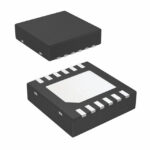 LM2759SDX/NOPB

The activity of extra discounts on wholesale prices is in full swing…
Please fill in your contact information and we will send you the latest wholesale price list.





