 ChipApex | Global Electronic Components Supplier

SEARCH
Search Product
Search Post
— IC芯片 | 连接器 | 传感器 | 被动器件 —
Search productSearch post
— IC芯片 | 连接器 | 传感器 | 被动器件 —
Consult the customer manager about the wholesale price.
consultation hotline:86-132-6715-2157
email:[email protected]
Contact the product manager for consultation. One-stop consultation is available.
Do you want a lower wholesale price? Please send us your inquiry and we will reply immediately.
The LM2792LD-L/NOPB is a current-regulated switched capacitor LED driver designed for backlight applications. It utilizes a charge pump topology to drive LEDs with high efficiency. The device supports both analog and PWM dimming methods, allowing for flexible brightness control. It operates within a frequency range of 900kHz to 1.8MHz, with specific variants running at 1.1MHz. The component is housed in a 10-WSON surface-mount package and functions across an operating temperature range of -30°C to 85°C.
This component is marked as obsolete and no longer manufactured by Texas Instruments. Procurement should focus on verifying the authenticity of existing stock from authorized distributors or secondary market suppliers. Buyers must confirm the exact revision level and package condition prior to purchase, as availability is limited to remaining inventory rather than new production runs.
Engineers selecting this part should consider its discontinued status when designing new products. Alternative solutions such as the LM27966SQ/NOPB are recommended for new designs. For maintenance or repair scenarios, verify that the replacement unit matches the original pinout and electrical characteristics. Ensure compatibility with existing PCB layouts and thermal management requirements before integrating substitute components.
The LM2792LD-L/NOPB belongs to the LM279x family of LED drivers from Texas Instruments. This series includes various models like the LM2794TL/NOPB and LM2792LD-H/NOPB, which share similar switched capacitor technologies. The 'L' suffix typically denotes specific operational parameters within the family. These devices are commonly used in consumer electronics requiring compact, efficient LED regulation.
The LM27966SQ/NOPB is listed as a similar available alternative. Verify functional equivalence regarding switching frequency, dimming interface, and current regulation capabilities. Check package dimensions and pin assignments to ensure mechanical compatibility with existing footprints.
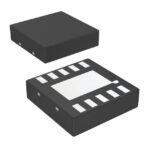 LM2792LD-L/NOPB

The activity of extra discounts on wholesale prices is in full swing…
Please fill in your contact information and we will send you the latest wholesale price list.





