ChipApex | Global Electronic Components Supplier
SEARCH
Search Product
Search Post
— IC芯片 | 连接器 | 传感器 | 被动器件 —
Search productSearch post
— IC芯片 | 连接器 | 传感器 | 被动器件 —
Consult the customer manager about the wholesale price.
consultation hotline:86-132-6715-2157
email:[email protected]
Contact the product manager for consultation. One-stop consultation is available.
Do you want a lower wholesale price? Please send us your inquiry and we will reply immediately.
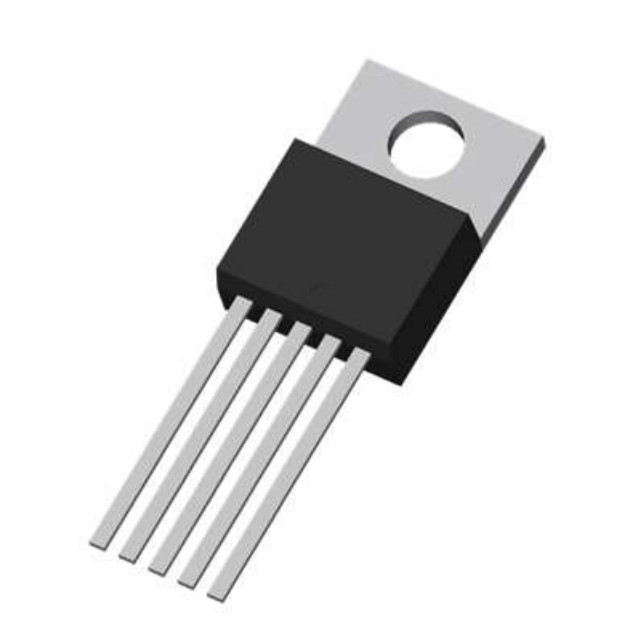
The LM29152T is a high-current, adjustable low-dropout voltage regulator manufactured by TAEJIN. It utilizes a PNP pass element to achieve a maximum dropout voltage of 350mV at full load current. The device provides an output current capability of 1.5A with a guaranteed initial tolerance of 1%. It features logic-level enable control and includes an error flag output that signals when the regulated voltage falls out of specification. The component operates within an input voltage range up to 26V and supports junction temperatures from -40°C to +125°C.
Verify the specific package variant (TO-220, TO-263, or TO-252) required for your design, as the base part number LM29152 applies to multiple form factors. Confirm the manufacturer source matches TAEJIN specifications. Ensure the ordering suffix corresponds to the correct packaging method, such as tube or reel, to match assembly requirements. Cross-reference the datasheet revision date to confirm electrical characteristics align with your system constraints.
Select this component when designing systems requiring precise voltage regulation under heavy loads with minimal voltage drop. The adjustable nature allows custom output voltages via external resistors. Consider the thermal resistance ratings for heat sink design if operating near maximum current limits. The enable pin simplifies power management integration with microcontrollers or logic circuits.
This device belongs to the LM2915x family of regulators, which also includes fixed-voltage variants like the LM29150 and LM29151. While the LM29150 offers fixed outputs without an enable pin, and the LM29151 adds enable functionality with fixed outputs, the LM29152 specifically combines the enable feature with adjustable output programming capabilities.
LM29152R
The output voltage is programmed using two external resistors connected to the ADJ pin. The formula VOUT = VREF * (1 + R1/R2) determines the setting, where VREF is approximately 1.24V.
The Error Flag is an open-collector output that pulls low when the output voltage drops below its nominal value by approximately 5%, indicating potential faults such as over-current or low input voltage.
 LM29152T
The activity of extra discounts on wholesale prices is in full swing…
Please fill in your contact information and we will send you the latest wholesale price list.