 ChipApex | Global Electronic Components Supplier
SEARCH
Search Product
Search Post
— IC芯片 | 连接器 | 传感器 | 被动器件 —
Search productSearch post
— IC芯片 | 连接器 | 传感器 | 被动器件 —
Consult the customer manager about the wholesale price.
consultation hotline:86-132-6715-2157
email:[email protected]
Contact the product manager for consultation. One-stop consultation is available.
Do you want a lower wholesale price? Please send us your inquiry and we will reply immediately.
The LM336D is a precision 2.5V voltage reference integrated circuit manufactured by STMicroelectronics. It operates as a monolithic shunt regulator diode with a nominal breakdown voltage of 2.5 volts. The device features a low temperature coefficient and a dynamic impedance of 0.2 ohms, ensuring stable performance across varying thermal conditions. A third pin allows for external adjustment of the reference voltage and temperature compensation. It supports an operating current range from 400 microamperes to 10 milliamperes, facilitating fast turn-on times and reliable regulation in precision analog applications.
Verify the specific suffix 'D' indicates the SO-8 package variant when ordering. Confirm the datasheet version matches the required temperature stability specifications. Ensure the application circuit provides sufficient current within the 400µA to 10mA range for proper regulation. Check for RoHS compliance status if environmental regulations apply to the final assembly.
Select this component when a fixed 2.5V reference is required with high accuracy. The adjustable pin allows customization if system requirements deviate from the standard 2.5V nominal. Consider the 0.2Ω dynamic impedance for noise-sensitive applications. Compare against LM236 variants if lower cost or different packaging options are needed for the same electrical performance.
The LM336 series belongs to STMicroelectronics' family of precision voltage references. It is functionally compatible with industry-standard equivalents like the National Semiconductor LM336-2.5. The 'D' suffix typically denotes surface-mount packaging, distinguishing it from through-hole variants. This IC serves as a fundamental building block for analog signal conditioning and reference generation in electronic designs.
Direct substitutes include the LM236D for commercial grade alternatives. Other manufacturers offer equivalent parts such as the LM336-2.5 from Texas Instruments or Fairchild. Verify pinout compatibility and package dimensions before substitution. Ensure temperature coefficients meet the specific design requirements.
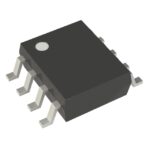 LM336D
The activity of extra discounts on wholesale prices is in full swing…
Please fill in your contact information and we will send you the latest wholesale price list.







