 ChipApex | Global Electronic Components Supplier

SEARCH
Search Product
Search Post
— IC芯片 | 连接器 | 传感器 | 被动器件 —
Search productSearch post
— IC芯片 | 连接器 | 传感器 | 被动器件 —
Consult the customer manager about the wholesale price.
consultation hotline:86-132-6715-2157
email:[email protected]
Contact the product manager for consultation. One-stop consultation is available.
Do you want a lower wholesale price? Please send us your inquiry and we will reply immediately.
The LM3404MA/NOPB is a constant current buck LED driver IC from Texas Instruments, designed for high-power LED applications. It operates with an input voltage range of 6 V to 42 V and delivers a regulated output current of 1 A. The device supports a maximum output voltage of 40 V and features an adjustable switching frequency ranging from 10 kHz to 1 MHz. It includes integrated PWM dimming control for brightness adjustment. The component is housed in an 8-SOIC (0.209 inch) package and functions within a junction temperature range of -40°C to +125°C.
Verify the specific suffix 'MA' against the official Texas Instruments datasheet to confirm the exact package dimensions and tape/reel specifications. Ensure the ordering part number matches the required RoHS compliance status and manufacturing site. Cross-reference the active status on the manufacturer's website to avoid obsolete components. Confirm that the 8-SOIC footprint aligns with the target PCB layout requirements before finalizing procurement.
Select this component when a single-channel, 1 A constant current solution is required for LEDs powered by voltages up to 42 V. It is suitable for designs prioritizing simplicity due to its integrated switch and minimal external component count. Consider the adjustable frequency range if EMI constraints or inductor size optimization are critical. Verify that the 40 V output voltage limit accommodates the forward voltage drop of the intended LED string configuration.
The LM3404 series represents Texas Instruments' family of non-synchronous buck LED drivers. The LM3404MA variant specifically denotes the standard voltage version (up to 42 V input) in an SOIC-8 package. This distinguishes it from the LM3404HV series, which supports higher input voltages up to 75 V. The 'NOPB' suffix indicates lead-free packaging and compliance with environmental standards.
Public confirmed substitute part numbers include LM3404M/NOPB and LM3404MRX/NOPB. These variants share identical electrical characteristics but differ in package type (MSOP vs. SOIC) or reel configuration. Ensure pinout compatibility and thermal performance match the existing design constraints when substituting.
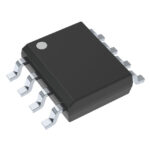 LM3404MA/NOPB

The activity of extra discounts on wholesale prices is in full swing…
Please fill in your contact information and we will send you the latest wholesale price list.





