 ChipApex | Global Electronic Components Supplier

SEARCH
Search Product
Search Post
— IC芯片 | 连接器 | 传感器 | 被动器件 —
Search productSearch post
— IC芯片 | 连接器 | 传感器 | 被动器件 —
Consult the customer manager about the wholesale price.
consultation hotline:86-132-6715-2157
email:[email protected]
Contact the product manager for consultation. One-stop consultation is available.
Do you want a lower wholesale price? Please send us your inquiry and we will reply immediately.
The LM3410YMFX/NOPB is a single-channel LED lighting driver IC from Texas Instruments, designed for Boost and SEPIC topologies. It delivers a constant output current of 2.8 A with an input voltage range of 2.7 V to 5.5 V. The device operates at a switching frequency between 360 kHz and 680 kHz, supporting output voltages from 3 V to 24 V. Packaged in a SOT-23-5 format, it functions within a temperature range of -40°C to +125°C. Key features include PWM dimming capability, enable/shutdown control, soft start, and thermal shutdown protection.
Verify the specific suffix 'YMF' against the official datasheet to confirm package type and tape/reel specifications. Ensure the component meets RoHS compliance requirements as indicated in the manufacturer documentation. Cross-reference the part number with the latest Texas Instruments product data sheet to validate electrical parameters and operating conditions before integration into design projects.
Select this component when designing circuits requiring a compact solution for low-voltage LED driving. The wide input voltage range accommodates various battery types, while the high switching frequency allows for smaller external passive components. Consider the thermal performance and package limitations when determining suitability for high-current applications compared to other members of the LM3410 family.
This device belongs to the LM3410 series of LED drivers, which are optimized for portable and automotive lighting. Unlike the LM3410X variant which operates at higher frequencies (1.2 MHz to 2 MHz), the YM variant utilizes a lower frequency range (360 kHz to 680 kHz). This distinction affects external component selection and electromagnetic interference characteristics within the same functional family.
The LM3410XMFX/NOPB serves as a direct alternative within the same series, offering identical topology and current capabilities but differing in switching frequency specifications. Designers must evaluate the impact of the frequency change on inductor and capacitor sizing when substituting between these variants.
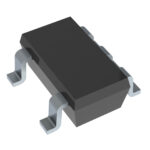 LM3410YMFX/NOPB

The activity of extra discounts on wholesale prices is in full swing…
Please fill in your contact information and we will send you the latest wholesale price list.





