 ChipApex | Global Electronic Components Supplier
SEARCH
Search Product
Search Post
— IC芯片 | 连接器 | 传感器 | 被动器件 —
Search productSearch post
— IC芯片 | 连接器 | 传感器 | 被动器件 —
Consult the customer manager about the wholesale price.
consultation hotline:86-132-6715-2157
email:[email protected]
Contact the product manager for consultation. One-stop consultation is available.
Do you want a lower wholesale price? Please send us your inquiry and we will reply immediately.
The LM3411M5-3.3 is a constant current LED driver controller manufactured by National Semiconductor, now part of Texas Instruments. It is designed to drive high-power LEDs with precise current regulation. The device operates from a wide input voltage range and supports various topologies including boost, buck, and SEPIC configurations. It features an internal oscillator for frequency setting and includes protection mechanisms such as thermal shutdown and open/short circuit detection. The M5 package indicates a small outline transistor (SOT-23) surface-mount footprint, suitable for space-constrained applications requiring efficient LED lighting solutions.
Verify the manufacturer source carefully as National Semiconductor was acquired by Texas Instruments. Ensure the specific suffix 'M5-3.3' matches your board design requirements. Confirm availability through authorized TI distributors. Check for updated datasheets reflecting any design changes post-acquisition. Validate pinout compatibility if replacing older components.
Select this component when precise LED current control is required in compact designs. Consider the operating voltage range relative to your LED string configuration. Evaluate the thermal performance needs given the SOT-23 package size. Compare efficiency requirements against other available LED driver controllers. Ensure the switching frequency settings align with your passive component constraints.
This part belongs to the LM341x family of LED drivers, which are widely used in general illumination and display backlights. The LM3411 specifically targets single-ended primary-inductor converter (SEPIC) and boost applications. It is part of National Semiconductor's portfolio before the Texas Instruments acquisition, maintaining compatibility with legacy designs while offering modern efficiency features.
Direct replacements may include LM3410 or LM3412 variants depending on topology needs. Verify pin-to-pin compatibility with LM3411M5/NOPB equivalents. Check for updated Texas Instruments versions with identical specifications. Ensure alternative parts support the same input voltage range and current capabilities.
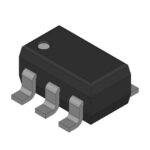 LM3411M5-3.3
The activity of extra discounts on wholesale prices is in full swing…
Please fill in your contact information and we will send you the latest wholesale price list.






