 ChipApex | Global Electronic Components Supplier

SEARCH
Search Product
Search Post
— IC芯片 | 连接器 | 传感器 | 被动器件 —
Search productSearch post
— IC芯片 | 连接器 | 传感器 | 被动器件 —
Consult the customer manager about the wholesale price.
consultation hotline:86-132-6715-2157
email:[email protected]
Contact the product manager for consultation. One-stop consultation is available.
Do you want a lower wholesale price? Please send us your inquiry and we will reply immediately.
The LM3431AMHX/NOPB is a three-channel constant current LED driver IC manufactured by Texas Instruments. It operates within an input voltage range of 4.5 V to 36 V and supports a maximum output current of 0.7 A per channel. The device utilizes peak current mode control with pulse width modulation for precise regulation. Key electrical parameters include a maximum switching frequency of 1100 kHz and a power dissipation rating of 3.1 W. It functions reliably across an extended temperature range from -40°C to +125°C and is housed in a heat sink-equipped HTSSOP-28 package.
Verify the specific suffix NOPB indicates lead-free compliance and RoHS adherence as per manufacturer standards. Confirm the HTSSOP-28 package variant matches your PCB footprint design. Ensure the operating environment stays within the specified -40°C to +125°C thermal limits. Cross-reference the datasheet for exact pinout configurations to prevent installation errors during assembly.
Select this component when designing circuits that require simultaneous control of multiple LED strings with uniform current distribution. It is suitable for applications demanding high efficiency and precise dimming performance. Consider the 36 V maximum input limit and 0.7 A current capacity to ensure compatibility with your LED load specifications. Evaluate the thermal management requirements given the 3.1 W power dissipation capability in the compact package.
This part belongs to the LM3431 series of LED drivers from Texas Instruments. It is designed for versatile lighting applications where reliable constant current sourcing is critical. The device integrates advanced control features to simplify system design while maintaining high performance standards across various industrial and commercial lighting environments.
Check for direct equivalents within the LM3431 family such as LM3431AMX/NOPB. Verify pin-to-pin compatibility and identical electrical characteristics before substitution. Consult official replacement guides to ensure functional parity in multi-channel LED driving scenarios.
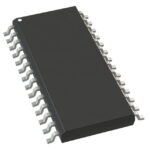 LM3431AMHX/NOPB

The activity of extra discounts on wholesale prices is in full swing…
Please fill in your contact information and we will send you the latest wholesale price list.





