 ChipApex | Global Electronic Components Supplier

SEARCH
Search Product
Search Post
— IC芯片 | 连接器 | 传感器 | 被动器件 —
Search productSearch post
— IC芯片 | 连接器 | 传感器 | 被动器件 —
Consult the customer manager about the wholesale price.
consultation hotline:86-132-6715-2157
email:[email protected]
Contact the product manager for consultation. One-stop consultation is available.
Do you want a lower wholesale price? Please send us your inquiry and we will reply immediately.
The LM3450AMT/NOPB is an LED lighting driver IC from Texas Instruments designed for high-performance applications requiring active power factor correction. It integrates a phase dimming decoder to support forward and reverse phase dimming control. The device operates with a supply voltage range of 8.5 V to 20 V and supports output currents up to 1.5 A. It features adjustable switching frequencies between 180 Hz and 700 Hz, enabling flexible design configurations. The component includes thermal shutdown protection and an enable/shutdown pin for system management. Packaged in a 16-TSSOP format, it functions as a boost or flyback controller suitable for AC/DC primary-side applications.
Verify the specific ordering suffix to confirm package type and tape/reel specifications. Ensure compatibility with existing bill of materials regarding thermal requirements and operating temperature ranges. Confirm that the selected variant meets all regulatory standards for the target market. Cross-reference datasheet parameters against application constraints before finalizing procurement orders.
Select this component when active power factor correction and integrated dimming decoding are required in a single solution. Consider the maximum output current capability relative to the LED string configuration. Evaluate the adjustable frequency range to meet specific EMI filtering requirements. Ensure the operating voltage range aligns with the available power supply rails in the target design.
This part belongs to the LM3450 series of LED drivers manufactured by Texas Instruments. It is specifically engineered for AC/DC power conversion topologies such as boost and flyback converters. The device addresses the need for compact, efficient solutions in modern LED lighting systems where both power quality and controllability are critical design factors.
Public confirmed substitute part numbers include LM3450AMTX/NOPB and LM3450MT/NOPB. Verify pinout compatibility and electrical parameter alignment before substitution. Ensure that any alternative component meets the same thermal and environmental specifications required by the original design.
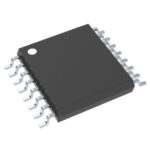 LM3450AMT/NOPB

The activity of extra discounts on wholesale prices is in full swing…
Please fill in your contact information and we will send you the latest wholesale price list.





