 ChipApex | Global Electronic Components Supplier

SEARCH
Search Product
Search Post
— IC芯片 | 连接器 | 传感器 | 被动器件 —
Search productSearch post
— IC芯片 | 连接器 | 传感器 | 被动器件 —
Consult the customer manager about the wholesale price.
consultation hotline:86-132-6715-2157
email:[email protected]
Contact the product manager for consultation. One-stop consultation is available.
Do you want a lower wholesale price? Please send us your inquiry and we will reply immediately.
The LM4041AIM3-1.2-T is a precision micropower shunt voltage reference featuring a fixed reverse breakdown voltage of 1.225V. It provides an initial accuracy of ±0.1% at 25°C with a maximum temperature coefficient of 100ppm/°C. The device operates within a wide current range from 60µA to 12mA and exhibits low output noise of 20µVRMS (10Hz to 10kHz). It is housed in a subminiature 3-pin SOT23 package and is guaranteed to function over the extended industrial temperature range of -40°C to +125°C.
Verify that the ordering suffix matches the required specifications. Confirm the package type corresponds to the SOT23 variant rather than the SC70 version. Ensure the temperature grade aligns with the extended range requirement (-40°C to +125°C) indicated by the 'E' designation in the part number structure. Cross-reference the manufacturer's official documentation to validate lead-free status and RoHS compliance before finalizing procurement.
Select this component when a fixed 1.225V reference is required in a compact footprint. The SOT23 package offers a 50% size reduction compared to standard SOT23 devices found in other series. Choose this specific grade if the design demands ±0.1% initial accuracy at 25°C. Verify that the application environment stays within the -40°C to +125°C operational limits to maintain specified performance characteristics.
This device belongs to the LM4041 family of improved precision micropower shunt voltage references manufactured by Maxim Integrated. It utilizes bandgap reference technology with curvature correction to minimize temperature drift. The product line includes various accuracy grades and package options, allowing designers to optimize for cost, size, or precision requirements while maintaining consistent electrical behavior across the series.
LM4041BIM3-1.2-T: Offers 0.2% accuracy instead of 0.1%. LM4041CEM3-1.2-T: Provides 0.5% accuracy. LM4041DEM3-1.2-T: Features 1.0% accuracy and a higher temperature coefficient. These parts share the same pinout and functionality but differ in initial tolerance specifications.
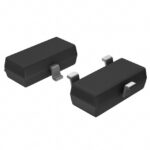 LM4041AIM3-1.2-T

The activity of extra discounts on wholesale prices is in full swing…
Please fill in your contact information and we will send you the latest wholesale price list.







