ChipApex | Global Electronic Components Supplier
SEARCH
Search Product
Search Post
— IC芯片 | 连接器 | 传感器 | 被动器件 —
Search productSearch post
— IC芯片 | 连接器 | 传感器 | 被动器件 —
Consult the customer manager about the wholesale price.
consultation hotline:86-132-6715-2157
email:[email protected]
Contact the product manager for consultation. One-stop consultation is available.
Do you want a lower wholesale price? Please send us your inquiry and we will reply immediately.
The LM5070MTC-50/NOPB is an integrated Power over Ethernet Powered Device (PD) interface and PWM controller designed for IEEE 802.3af compliance. It combines a PD interface with a high-voltage buck switching regulator in a single package. The device operates from a supply voltage range of 1.8 V to 75 V and supports a maximum duty cycle of 80%. It features a fixed switching frequency of 665 kHz and includes an internal power switch with a maximum on-resistance of 2.2 Ohms. The component is rated for operation between -40°C and +125°C and is housed in a 16-pin TSSOP package.
Verify the specific suffix '50' indicates the 802.3af standard variant distinct from other LM5070 models. Confirm the 'NOPB' designation ensures lead-free and RoHS compliance status. Check for obsolescence notices as older National Semiconductor variants may have different availability. Ensure the TSSOP-16 footprint matches the target PCB layout requirements before finalizing procurement.
Select this component when a combined PoE detection and DC/DC conversion solution is required to minimize board space. It is suitable for applications needing input voltages up to 75V without external high-voltage switches. Consider the fixed 665 kHz frequency for inductor size optimization. Verify that the 80% maximum duty cycle meets the required output voltage step-down ratio for the specific application load.
This part belongs to the LM5070 family, which integrates PoE PD interfaces with PWM controllers. It succeeds earlier discrete solutions by combining interface logic and power regulation. The device replaces separate controllers and high-voltage switches, reducing component count. It is manufactured by Texas Instruments following their acquisition of National Semiconductor.
LM5070MTCX-80/NOPB offers similar integration but supports higher power standards. LM5070SD-50/NOPB provides the same functionality in a smaller WSON package. Direct pin-to-pin replacements within the same family should be verified against specific electrical parameter differences.
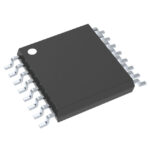 LM5070MTC-50/NOPB
The activity of extra discounts on wholesale prices is in full swing…
Please fill in your contact information and we will send you the latest wholesale price list.