 ChipApex | Global Electronic Components Supplier
SEARCH
Search Product
Search Post
— IC芯片 | 连接器 | 传感器 | 被动器件 —
Search productSearch post
— IC芯片 | 连接器 | 传感器 | 被动器件 —
Consult the customer manager about the wholesale price.
consultation hotline:86-132-6715-2157
email:[email protected]
Contact the product manager for consultation. One-stop consultation is available.
Do you want a lower wholesale price? Please send us your inquiry and we will reply immediately.
The LM5071MTX-80/NOPB is a synchronous buck controller from Texas Instruments designed for high-efficiency power conversion. It operates with an input voltage range of 4.5V to 60V and supports output voltages down to 0.9V. The device integrates an N-channel driver capable of sourcing and sinking up to 2A of peak gate current, enabling the use of external low RDS(on) MOSFETs. It features adjustable switching frequencies from 300kHz to 2.2MHz and includes comprehensive protection mechanisms such as cycle-by-cycle current limiting, overvoltage protection, and thermal shutdown. The component is housed in a thermally enhanced WSON-10 package.
Verify the specific suffix '80' against the manufacturer's official datasheet to confirm the exact internal resistor network or feature set associated with this variant. Ensure the ordering part number matches the required package type and temperature grade. Cross-reference the RoHS compliance status directly with the latest product information file provided by Texas Instruments before finalizing procurement.
Select this controller when designing synchronous buck converters requiring high efficiency and wide input voltage flexibility. Consider the integrated driver strength for minimizing switching losses with external MOSFETs. Evaluate the thermal performance requirements of the WSON-10 package relative to the expected power dissipation in the target application environment.
This component belongs to the LM5071 family of synchronous buck controllers. It is engineered for applications demanding high power density and efficiency. The family typically offers flexible configuration options through external components, allowing designers to tailor switching frequency and protection thresholds to specific circuit requirements.
Consult the Texas Instruments replacement matrix for direct pin-compatible alternatives. Verify that any substitute component maintains compatibility with the existing PCB layout and thermal management design. Ensure electrical specifications match the original requirements.
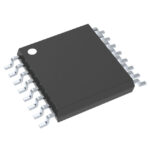 LM5071MTX-80/NOPB
The activity of extra discounts on wholesale prices is in full swing…
Please fill in your contact information and we will send you the latest wholesale price list.





