 ChipApex | Global Electronic Components Supplier

SEARCH
Search Product
Search Post
— IC芯片 | 连接器 | 传感器 | 被动器件 —
Search productSearch post
— IC芯片 | 连接器 | 传感器 | 被动器件 —
Consult the customer manager about the wholesale price.
consultation hotline:86-132-6715-2157
email:[email protected]
Contact the product manager for consultation. One-stop consultation is available.
Do you want a lower wholesale price? Please send us your inquiry and we will reply immediately.
The LM51561DSSR is a non-synchronous DC-DC switching controller manufactured by Texas Instruments, designed for high-frequency power conversion applications. It supports Boost, Flyback, and SEPIC topologies with a single output configuration. The device operates within an input voltage range of 3.5 V to 60 V and delivers an output current capability of 1.5 A. It features a programmable switching frequency adjustable from 100 kHz to 2.2 MHz and supports a maximum duty cycle of 96%. The output voltage is adjustable between 1.5 V and 300 V. Operating temperatures range from -40°C to +125°C, and the component is housed in a WSON-12 surface-mount package.
Verify the specific suffix DSSR against the manufacturer datasheet to confirm the exact package variant and tape-and-reel specifications. Ensure compatibility with the intended PCB footprint for the WSON-12 package. Confirm that the selected component meets all required thermal and electrical standards for the target application environment before finalizing procurement orders.
Select this controller when designing circuits requiring flexible topology support for boost, flyback, or SEPIC converters. It is suitable for applications demanding wide input voltage ranges and high switching frequencies to minimize passive component size. Consider the non-synchronous design constraints and ensure the external MOSFET selection aligns with the 1.5 A output current requirement and thermal management needs.
This component belongs to the LM5156x family of wide input voltage synchronous and non-synchronous controllers. These devices are engineered for high-density power conversion solutions. The LM51561DSSR specifically represents the non-synchronous variant, offering versatility for various industrial and automotive power stages while maintaining robust performance across extended temperature ranges.
Consult official substitution guides for compatible alternatives within the LM5156x series or equivalent Texas Instruments controllers. Verify pinout compatibility and electrical parameter alignment before transitioning to substitute part numbers.
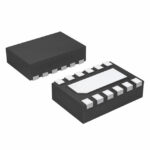 LM51561DSSR

The activity of extra discounts on wholesale prices is in full swing…
Please fill in your contact information and we will send you the latest wholesale price list.





