 ChipApex | Global Electronic Components Supplier

SEARCH
Search Product
Search Post
— IC芯片 | 连接器 | 传感器 | 被动器件 —
Search productSearch post
— IC芯片 | 连接器 | 传感器 | 被动器件 —
Consult the customer manager about the wholesale price.
consultation hotline:86-132-6715-2157
email:[email protected]
Contact the product manager for consultation. One-stop consultation is available.
Do you want a lower wholesale price? Please send us your inquiry and we will reply immediately.
The LM5156DSSR is a non-synchronous DC-DC switching controller from Texas Instruments, designed for boost, flyback, and SEPIC topologies. It operates with an input voltage range of 3.5 V to 60 V and supports adjustable output voltages from 1.5 V to 300 V. The device features a programmable switching frequency between 100 kHz and 2.2 MHz, enabling compact passive component selection. It delivers up to 1.5 A output current and includes integrated shutdown functionality. Operating temperatures span from -40°C to +125°C, housed in a WSON-12 surface-mount package.
Verify the exact suffix DSSR against the manufacturer datasheet to confirm the specific tape-and-reel packaging configuration and temperature grade. Ensure compatibility with the intended PCB footprint for the WSON-12 package. Cross-reference the ordering part number with official Texas Instruments documentation to avoid substitution errors during procurement.
Select this controller when designing isolated or non-isolated converters requiring wide input ranges and high efficiency. Consider the thermal performance within the WSON-12 package for the expected load conditions. Evaluate the external component requirements for the chosen switching frequency to optimize board space and cost while maintaining stability across the operating temperature range.
This component belongs to the LM5156x family of wide-input non-synchronous controllers. It shares architectural similarities with other devices in the series but differs in pinout and package options. The family targets applications needing flexible topology support and robust protection features in a compact form factor.
Check for LM51561 variants if synchronous rectification is required. Verify pin-to-pin compatibility with LM5155 models for direct upgrades in existing boost-only designs. Confirm electrical specifications match before substituting with other PMIC solutions.
No, it is a non-synchronous controller designed for use with external MOSFETs.
The device supports switching frequencies up to 2.2 MHz.
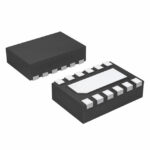 LM5156DSSR

The activity of extra discounts on wholesale prices is in full swing…
Please fill in your contact information and we will send you the latest wholesale price list.





