ChipApex | Global Electronic Components Supplier

SEARCH
Search Product
Search Post
— IC芯片 | 连接器 | 传感器 | 被动器件 —
Search productSearch post
— IC芯片 | 连接器 | 传感器 | 被动器件 —
Consult the customer manager about the wholesale price.
consultation hotline:86-132-6715-2157
email:[email protected]
Contact the product manager for consultation. One-stop consultation is available.
Do you want a lower wholesale price? Please send us your inquiry and we will reply immediately.
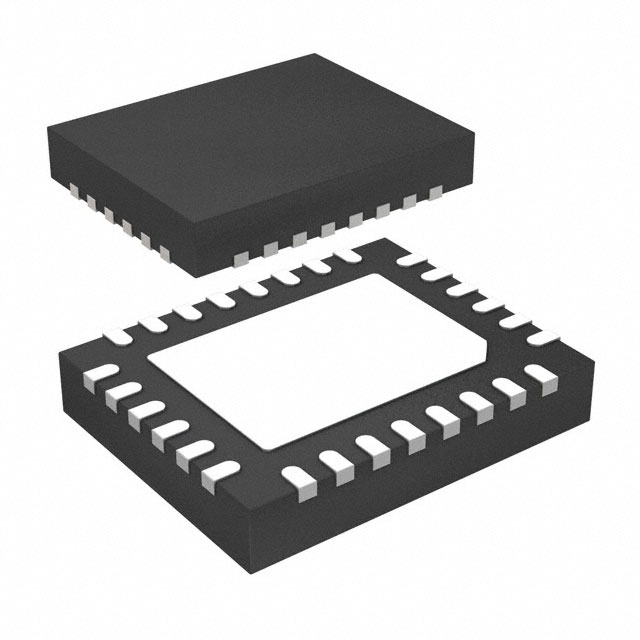
The LM5175RHFR is a synchronous four-switch buck-boost DC/DC controller manufactured by Texas Instruments. It supports a wide input voltage range of 3.5 V to 42 V, with a maximum rating of 60 V. The device regulates output voltages from 0.8 V to 55 V and can drive external MOSFETs for output currents up to 20 A. It features an adjustable switching frequency between 100 kHz and 600 kHz, which can be synchronized to an external clock. The component operates within a junction temperature range of -40°C to +125°C and is housed in a 28-pin HTSSOP package.
Verify the suffix RHFR indicates the HTSSOP-28 package variant when sourcing. Confirm RoHS compliance and manufacturing date codes against specific project requirements. Ensure ESD handling protocols are followed during assembly due to the sensitivity of the CMOS control circuitry. Cross-reference datasheet revisions to confirm pinout consistency if replacing older inventory batches.
Select this controller for applications requiring a single-inductor solution that handles significant voltage transients without mode switching losses. Evaluate thermal performance based on the expected load current and PCB copper area, as the HTSSOP-28 package relies on the exposed pad for heat dissipation. Consider the need for external compensation components to stabilize the feedback loop under varying line and load conditions.
The LM5175RHFR belongs to the LM5175 family of wide-input-voltage buck-boost controllers. It shares functional similarities with the LM5176, which offers a higher 55 V input rating, and the LM5177, designed for bidirectional power flow. This specific part is optimized for standard unidirectional automotive and industrial applications where a 42 V nominal system voltage is prevalent.
LM5175RHFT: Identical electrical specifications but packaged in a 28-VQFN form factor instead of HTSSOP. LM5175PWPR: Same functionality in an HTSSOP-28 package but may differ in moisture sensitivity level or reel quantity. LM5176RHFR: Higher voltage tolerance up to 55 V; verify input supply limits before substitution.
 LM5175RHFR

The activity of extra discounts on wholesale prices is in full swing…
Please fill in your contact information and we will send you the latest wholesale price list.