 ChipApex | Global Electronic Components Supplier

SEARCH
Search Product
Search Post
— IC芯片 | 连接器 | 传感器 | 被动器件 —
Search productSearch post
— IC芯片 | 连接器 | 传感器 | 被动器件 —
Consult the customer manager about the wholesale price.
consultation hotline:86-132-6715-2157
email:[email protected]
Contact the product manager for consultation. One-stop consultation is available.
Do you want a lower wholesale price? Please send us your inquiry and we will reply immediately.
The LM5176PWPR is a synchronous four-switch buck-boost controller from Texas Instruments, designed for wide input voltage applications. It operates with an input voltage range of 4.2 V to 55 V and supports output voltages from 800 mV to 55 V. The device features an adjustable switching frequency between 100 kHz and 600 kHz and delivers up to 2 A of output current. It utilizes a non-isolated topology and is housed in a 28-pin HTSSOP package. The component is qualified under the AEC-Q100 standard for automotive use and functions within a temperature range of -40°C to +125°C.
Verify that the ordering suffix matches the required tape-and-reel configuration. Confirm AEC-Q100 qualification status if automotive compliance is mandatory. Check humidity sensitivity classification prior to soldering. Ensure the HTSSOP-28 footprint aligns with PCB layout specifications. Validate operating temperature range against system thermal constraints.
Select this controller when input voltage exceeds or falls below the desired output level. Compare output current ratings against load requirements to ensure adequate performance. Evaluate switching frequency options to balance efficiency and passive component size. Consider package thermal characteristics for high-power dissipation environments.
This component belongs to the LM5176 family of wide VIN synchronous buck-boost controllers. It shares architectural similarities with the LM5175 but offers higher input voltage tolerance. The device complements other Texas Instruments power management solutions by providing versatile topology control for complex power distribution networks.
LM5176QPWPTQ1: Automotive-grade variant with identical electrical specifications and AEC-Q100 qualification. LM5176PWPRB: Alternative reel packaging option for the same functional device. LM5175PWPR: Lower input voltage version (42 V max) suitable for less demanding supply ranges.
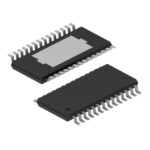 LM5176PWPR

The activity of extra discounts on wholesale prices is in full swing…
Please fill in your contact information and we will send you the latest wholesale price list.





