 ChipApex | Global Electronic Components Supplier

SEARCH
Search Product
Search Post
— IC芯片 | 连接器 | 传感器 | 被动器件 —
Search productSearch post
— IC芯片 | 连接器 | 传感器 | 被动器件 —
Consult the customer manager about the wholesale price.
consultation hotline:86-132-6715-2157
email:[email protected]
Contact the product manager for consultation. One-stop consultation is available.
Do you want a lower wholesale price? Please send us your inquiry and we will reply immediately.
The LM5642MTCX/NOPB is a high-voltage, dual synchronous buck converter controller manufactured by Texas Instruments. It operates with a switching frequency of 200 kHz and supports a maximum duty cycle of 98.9%. The device provides two output channels, each capable of delivering up to 20 A of output current. Output voltage regulation ranges from 1.3 V to 32.4 V. The supply voltage range is specified between 4.5 V and 36 V. The component functions within an operating temperature range of -40°C to +125°C and is housed in a TSSOP-28 package.
Verify the manufacturer designation carefully, as the part was originally developed by National Semiconductor but is now produced and distributed by Texas Instruments. Confirm the specific suffix 'NOPB' indicates lead-free and RoHS compliance status according to the latest datasheet revision. Ensure the TSSOP-28 package variant matches your PCB footprint requirements before ordering.
Select this component when designing high-voltage step-down converters requiring dual independent outputs. The 200 kHz switching frequency offers a balance between efficiency and passive component size. Consider the thermal performance of the TSSOP-28 package for your specific current load conditions. Verify that the input voltage range of 4.5 V to 36 V aligns with your system's power rail specifications.
This component belongs to the LM5642 family of high-voltage dual synchronous buck controllers. While originally associated with National Semiconductor, the product line is currently managed by Texas Instruments following their acquisition. The device is categorized under PMIC - Power Management ICs and Switching Controllers, designed for robust industrial and communication applications requiring reliable voltage regulation.
The LM5642MTC/NOPB (tube packaging) serves as a direct functional equivalent with identical electrical characteristics but different packaging. Other variants such as LM5642XMH/NOPB offer similar performance in an HTSSOP-28 package. Verify pin compatibility and thermal dissipation requirements when substituting across package types.
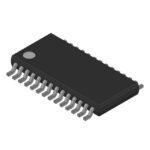 LM5642MTCX/NOPB

The activity of extra discounts on wholesale prices is in full swing…
Please fill in your contact information and we will send you the latest wholesale price list.





