 ChipApex | Global Electronic Components Supplier

SEARCH
Search Product
Search Post
— IC芯片 | 连接器 | 传感器 | 被动器件 —
Search productSearch post
— IC芯片 | 连接器 | 传感器 | 被动器件 —
Consult the customer manager about the wholesale price.
consultation hotline:86-132-6715-2157
email:[email protected]
Contact the product manager for consultation. One-stop consultation is available.
Do you want a lower wholesale price? Please send us your inquiry and we will reply immediately.
The LM5642XMT is a high-voltage dual synchronous buck controller manufactured by Texas Instruments. It features two independent output channels designed for efficient power conversion in demanding applications. The device supports a switching frequency of 375 kHz and accommodates output voltages ranging from 1.3 V to 32.4 V. Each channel can deliver up to 20 A of output current. The controller operates within a supply voltage range of 4.5 V to 36 V and functions reliably across an extended temperature range of -40°C to +125°C. It utilizes a 28-TSSOP package for surface-mount installation.
Verify the specific suffix designation when ordering, as variations such as XMT or XMH/NOPB may indicate differences in packaging type or manufacturing origin. Confirm that the required package style aligns with your assembly process requirements. Ensure compatibility with existing design specifications regarding thermal performance and electrical parameters before finalizing procurement decisions.
Select this component for designs requiring dual isolated or non-isolated buck outputs driven by a single controller IC. Consider the 375 kHz switching frequency for balancing efficiency and component size. Evaluate the 20 A per channel current capability against peak load requirements. Verify that the input voltage range suits the available power source and that the TSSOP package fits the PCB layout constraints.
The LM5642XMT belongs to the LM5642 family of high-voltage dual synchronous buck converters. This series is engineered for applications needing multiple regulated outputs from a common high-voltage bus. The controller simplifies design by integrating necessary drive and control logic for external MOSFETs, reducing bill of materials complexity compared to discrete solutions.
Public confirmed substitute part numbers are not provided in the available documentation. Designers should consult official Texas Instruments resources for cross-reference information or equivalent product recommendations based on specific application requirements.
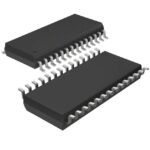 LM5642XMT

The activity of extra discounts on wholesale prices is in full swing…
Please fill in your contact information and we will send you the latest wholesale price list.




