 ChipApex | Global Electronic Components Supplier
SEARCH
Search Product
Search Post
— IC芯片 | 连接器 | 传感器 | 被动器件 —
Search productSearch post
— IC芯片 | 连接器 | 传感器 | 被动器件 —
Consult the customer manager about the wholesale price.
consultation hotline:86-132-6715-2157
email:[email protected]
Contact the product manager for consultation. One-stop consultation is available.
Do you want a lower wholesale price? Please send us your inquiry and we will reply immediately.
The LM74912QRGERQ1 is an automotive-grade ideal diode controller with integrated circuit breaker functionality, designed for high-reliability power distribution. It supports input voltages from 3V to 65V and operates within a temperature range of -40°C to 125°C. The device features a 200kHz adaptive current sensing (ACS) frequency and includes undervoltage and overvoltage protection mechanisms. Packaged in a 24-VQFN (4x4mm) surface-mount case, it utilizes external N-channel MOSFETs to achieve low forward voltage drop and precise load sharing.
Verify the specific suffix 'RGE' corresponds to the 24-VQFN package configuration required for your PCB footprint. Confirm that the component meets AEC-Q100 grade requirements for your target automotive application. Ensure external N-channel MOSFET selection aligns with the controller's drive capabilities and thermal constraints. Check for any recent Product Change Notifications regarding assembly sites or material composition updates.
Select this component when designing systems requiring active load sharing among multiple power sources. The integrated circuit breaker simplifies protection logic compared to standard ideal diode controllers. Consider the 200kHz switching frequency for balancing EMI performance and transient response speed. Ensure the external MOSFET Rds(on) is optimized to work effectively with the ACS algorithm for minimal conduction losses.
This part belongs to the LM749x0-Q1 family of automotive ideal diode controllers. It shares architectural similarities with the LM74910-Q1 but adds integrated circuit breaker functions. The Q1 designation indicates compliance with automotive quality and reliability standards. It serves as a critical interface between power sources and loads in complex vehicle electrical networks.
The LM74910-Q1 offers similar ideal diode control but lacks the integrated circuit breaker feature. Verify if the additional protection hardware in the LM74912-Q1 is necessary for the specific design. No direct pin-to-pin substitutes with identical functionality are publicly confirmed.
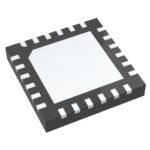 LM74912QRGERQ1
The activity of extra discounts on wholesale prices is in full swing…
Please fill in your contact information and we will send you the latest wholesale price list.





