 ChipApex | Global Electronic Components Supplier
SEARCH
Search Product
Search Post
— IC芯片 | 连接器 | 传感器 | 被动器件 —
Search productSearch post
— IC芯片 | 连接器 | 传感器 | 被动器件 —
Consult the customer manager about the wholesale price.
consultation hotline:86-132-6715-2157
email:[email protected]
Contact the product manager for consultation. One-stop consultation is available.
Do you want a lower wholesale price? Please send us your inquiry and we will reply immediately.
The LM8500HLQ9 is a four-wire resistive touchscreen controller manufactured by Texas Instruments (formerly National Semiconductor). It features an integrated 10-bit A/D converter capable of sampling up to 500 coordinate pairs per second. The device communicates via a UART interface at 38400 bps and includes internal non-volatile memory for storing calibration data and configuration settings. Operating with a 5V supply, it incorporates a high brownout reset feature (4.17V–4.5V) and supports clock frequencies of 3.27 MHz or 10 MHz. The component is housed in a 44-pin LLP package and operates within a temperature range of 0°C to +70°C.
Verify the specific suffix 'H' indicates the 44-pin package variant and 'LQ9' denotes the LLP package with 0°C to +70°C operating temperature. Confirm that the high brownout voltage threshold aligns with the system's 5V power rail requirements. Ensure the UART baud rate configuration matches the host processor settings before integration.
Select the LM8500HLQ9 when a 5V operating voltage and high brownout protection are required. This model supports both 3.27 MHz and 10 MHz oscillator frequencies via the CLK_SET pin. Choose this part over the LM8300 if the application demands a higher brownout trip voltage (4.17V–4.5V vs 2.7V–2.9V). Ensure the design accommodates the 44-pin LLP footprint.
The LM8500 series belongs to the family of four-wire resistive touchscreen controllers from National Semiconductor, now Texas Instruments. It is functionally similar to the LM8300 but differs in its brownout reset voltage threshold and supported clock speeds. The LM8500 is designed for applications requiring robust operation on a 5V supply with automatic wake-up capabilities from low-power standby modes.
The LM8300 is a related device within the same datasheet but features a low brownout voltage (2.7V–2.9V) and only supports 3.27 MHz operation. Direct substitution requires verifying that the lower brownout threshold and fixed clock speed of the LM8300 meet the system requirements.
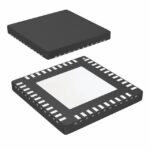 LM8500HLQ9
The activity of extra discounts on wholesale prices is in full swing…
Please fill in your contact information and we will send you the latest wholesale price list.






