 ChipApex | Global Electronic Components Supplier
SEARCH
Search Product
Search Post
— IC芯片 | 连接器 | 传感器 | 被动器件 —
Search productSearch post
— IC芯片 | 连接器 | 传感器 | 被动器件 —
Consult the customer manager about the wholesale price.
consultation hotline:86-132-6715-2157
email:[email protected]
Contact the product manager for consultation. One-stop consultation is available.
Do you want a lower wholesale price? Please send us your inquiry and we will reply immediately.
The LMH6521SQX/NOPB is a high-performance dual digital variable-gain amplifier (DVGA) manufactured by Texas Instruments. It integrates two independent VGA channels within a single package, designed for applications requiring precise gain control. The device operates with a supply voltage range of 4.5 V to 5.25 V and draws approximately 182 mA of operating current. Key electrical specifications include a slew rate of 5 kV/µs, a common-mode rejection ratio (CMRR) of 60 dB, and an input offset voltage of 25 mV. It features an input voltage noise density of 1.1 nV/√Hz and a power supply rejection ratio (PSRR) of 60 dB. The component supports a maximum voltage gain of 22 dB and functions reliably across an industrial temperature range from -40°C to +85°C.
Verify the specific suffix 'SQX' against the manufacturer's official datasheet to confirm package type and tape-and-reel specifications. Ensure compatibility with the required operating temperature range and supply voltage levels before integration. Cross-reference the ordering part number with the latest Texas Instruments documentation to avoid discrepancies in pinout or electrical characteristics.
Select this component when dual-channel gain control is required within a compact footprint. Consider the 22 dB maximum gain and 5 kV/µs slew rate for bandwidth-sensitive applications. Evaluate the 182 mA current consumption against system power budgets. Verify that the WQFN-32 package fits the available PCB space and thermal management requirements.
This device belongs to the LMH6517/LMH6521 family of dual digital VGAs from Texas Instruments. It shares functional similarities with the LMH6517 but offers specific performance optimizations for high-frequency applications. The series is designed for robust performance in demanding RF and IF environments, providing matched channel characteristics for differential signal paths.
The LMH6517SQE/NOPB is a documented similar part within the same product family. Verify pin-to-pin compatibility and electrical parameter alignment before substitution.
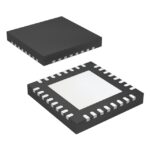 LMH6521SQX/NOPB
The activity of extra discounts on wholesale prices is in full swing…
Please fill in your contact information and we will send you the latest wholesale price list.






