ChipApex | Global Electronic Components Supplier
SEARCH
Search Product
Search Post
— IC芯片 | 连接器 | 传感器 | 被动器件 —
Search productSearch post
— IC芯片 | 连接器 | 传感器 | 被动器件 —
Consult the customer manager about the wholesale price.
consultation hotline:86-132-6715-2157
email:[email protected]
Contact the product manager for consultation. One-stop consultation is available.
Do you want a lower wholesale price? Please send us your inquiry and we will reply immediately.
The LMH6553SD/NOPB is a single-channel current feedback fully differential amplifier manufactured by Texas Instruments. It features a 900 MHz bandwidth and a 2300 V/µs slew rate, housed in an 8-WSON package measuring 3x2.5 mm with an exposed pad. The device operates on a supply voltage ranging from 4.5 V to 12 V, drawing 29.1 mA of supply current. Key electrical specifications include an input bias current of 50 µA, an output current capability of 120 mA per channel, and a common-mode rejection ratio of 82 dB. It functions within a temperature range of -40°C to 125°C.
Verify the specific suffix SD/NOPB against the manufacturer's latest datasheet to confirm the WSON-8 package and lead-free status. Ensure the ordering part number matches the required tape-and-reel or cut-tape packaging format for your assembly line. Cross-reference the component marking code with official identification guides to prevent counterfeit substitution during procurement.
Select this component when a fully differential output is required for driving single-ended ADCs or balancing signals in high-frequency applications. The current feedback topology offers consistent bandwidth regardless of gain settings, simplifying design calculations. Consider the exposed thermal pad requirement for proper PCB thermal management and grounding strategies to maintain performance at elevated temperatures.
This device belongs to the LMH6553 family of high-speed differential amplifiers designed for demanding video and RF applications. It complements other members like the LMH6552 and LMH6554, which offer varying bandwidths and power consumption profiles. The series utilizes Texas Instruments' PowerWise technology to optimize efficiency while maintaining high dynamic range and low distortion characteristics essential for precision signal chains.
Direct pin-compatible alternatives within the same family include the LMH6553MRX/NOPB, which shares identical electrical specifications but utilizes an HSOIC-8EP package instead of WSON. Designers must verify that the mechanical footprint and thermal dissipation requirements of the target PCB accommodate the alternative package type before substitution.
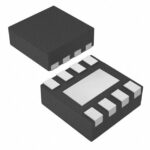 LMH6553SD/NOPB
The activity of extra discounts on wholesale prices is in full swing…
Please fill in your contact information and we will send you the latest wholesale price list.