 ChipApex | Global Electronic Components Supplier
SEARCH
Search Product
Search Post
— IC芯片 | 连接器 | 传感器 | 被动器件 —
Search productSearch post
— IC芯片 | 连接器 | 传感器 | 被动器件 —
Consult the customer manager about the wholesale price.
consultation hotline:86-132-6715-2157
email:[email protected]
Contact the product manager for consultation. One-stop consultation is available.
Do you want a lower wholesale price? Please send us your inquiry and we will reply immediately.
The LMH6609MAX/NOPB is a single-channel voltage feedback operational amplifier manufactured by Texas Instruments. It features a gain bandwidth product of 260 MHz and a slew rate of 1.4 kV/us. The device operates within a supply voltage range of 6.6 V to 12 V, drawing 7 mA of operating supply current. It provides an output current of 90 mA per channel with an input offset voltage of 2.5 mV and input bias current of 5 uA. Common mode rejection ratio ranges from 67 dB to 73 dB. The component is housed in an SOIC-Narrow-8 package and supports surface mount installation.
Verify the complete part number including the /NOPB suffix to ensure compliance with RoHS standards and lead-free manufacturing requirements. Confirm that the SOIC-8 package dimensions match your PCB footprint specifications. Check the datasheet for specific thermal dissipation requirements under your intended load conditions. Ensure supply voltages remain within the specified 6.6 V to 12 V range to prevent device damage or performance degradation during operation.
Select this component when a single-channel high-speed amplifier with rail-to-rail output is required. Compare the 260 MHz gain bandwidth product against system frequency requirements. Evaluate the 1.4 kV/us slew rate for fast transient response needs. Consider the 7 mA supply current for power budget constraints. Verify compatibility with available supply voltages between 6.6 V and 12 V before finalizing the design choice.
This device belongs to the LMH6609 series of high-speed operational amplifiers from Texas Instruments. It is part of the VIP10 family, optimized for video and broadband applications. The MAX/NOPB designation indicates a commercial temperature range variant in an SOIC package without halogen content. It serves as a successor to older non-RoHS versions like the LMH6609MF.
Direct replacement options include the LMH6609MA/NOPB which shares identical electrical characteristics but may differ in packaging configuration. Verify pinout compatibility and thermal performance when substituting components from different manufacturers.
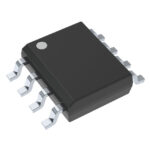 LMH6609MAX/NOPB
The activity of extra discounts on wholesale prices is in full swing…
Please fill in your contact information and we will send you the latest wholesale price list.






