ChipApex | Global Electronic Components Supplier

SEARCH
Search Product
Search Post
— IC芯片 | 连接器 | 传感器 | 被动器件 —
Search productSearch post
— IC芯片 | 连接器 | 传感器 | 被动器件 —
Consult the customer manager about the wholesale price.
consultation hotline:86-132-6715-2157
email:[email protected]
Contact the product manager for consultation. One-stop consultation is available.
Do you want a lower wholesale price? Please send us your inquiry and we will reply immediately.
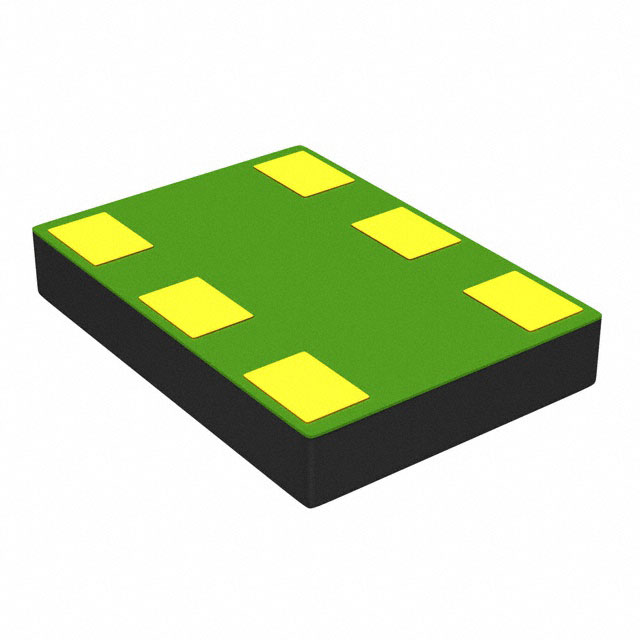
The LMK61E07-SIAR is a multi-signal format, ultra-low jitter programmable oscillator from Texas Instruments. It features an internal EEPROM for self-starting configurations and supports LVPECL, LVDS, or HCSL outputs. The device operates within a -40°C to +85°C temperature range in a 6-pin QFM (SIA) package. Key electrical parameters include a typical RMS jitter of 90 fs at frequencies above 100 MHz and a power supply rejection ratio (PSRR) of -70 dBc. It utilizes an integrated VCO and PLLatinum™ synthesizer, with full programming capability via an I2C serial interface.
Verify the specific suffix 'SIAR' corresponds to the required tape-and-reel packaging and operating temperature grade. Confirm that the QFM package dimensions align with your PCB footprint requirements. Ensure the I2C address settings are compatible with your system controller. Validate that the output signal levels meet the input specifications of downstream components.
Select this component when ultra-low phase noise is critical for system performance. The internal EEPROM simplifies board design by removing the need for external configuration chips. Consider the multi-signal output flexibility if different voltage standards are required across the system. The robust PSRR makes it suitable for noisy power environments common in industrial applications.
This part belongs to Texas Instruments' LMK61 series of programmable oscillators. It shares architectural similarities with other members like the LMK61E2 but offers specific pinout and configuration options tailored for compact designs. The series is designed for applications requiring precise clock generation with minimal added jitter.
Direct substitutes may include other LMK61 series variants such as LMK61E2, provided they support the same output formats and package constraints. Verify functional equivalence regarding jitter performance and I2C compatibility before substitution.
 LMK61E07-SIAR

The activity of extra discounts on wholesale prices is in full swing…
Please fill in your contact information and we will send you the latest wholesale price list.