 ChipApex | Global Electronic Components Supplier

SEARCH
Search Product
Search Post
— IC芯片 | 连接器 | 传感器 | 被动器件 —
Search productSearch post
— IC芯片 | 连接器 | 传感器 | 被动器件 —
Consult the customer manager about the wholesale price.
consultation hotline:86-132-6715-2157
email:[email protected]
Contact the product manager for consultation. One-stop consultation is available.
Do you want a lower wholesale price? Please send us your inquiry and we will reply immediately.
The LMK61E0M-SIAT is an ultra-low jitter programmable oscillator manufactured by Texas Instruments. It operates within a frequency range of 50 MHz to 200 MHz and utilizes LVCMOS output format. The device supports a supply voltage of 3.3 V and includes an internal EEPROM for configuration storage. It features enable/disable functionality and is housed in an 8-SMD module package. The component is designed for surface mount installation and functions reliably across a temperature range of -40°C to +85°C.
Verify the specific frequency setting required, as this programmable model covers a range rather than a single fixed value. Confirm that the LVCMOS output format aligns with the target circuit's input requirements. Ensure the 8-SMD package dimensions fit the designated PCB footprint. Check for updated design recommendations, as availability status may vary based on production cycles.
Select this component when a flexible frequency solution between 50 MHz and 200 MHz is necessary without external programming hardware. The internal EEPROM simplifies board design by storing settings permanently. Consider the LVCMOS output swing limits compared to differential outputs if noise immunity is a primary concern. Evaluate power consumption against system thermal constraints given the 3.3 V operation.
This part belongs to the LMK61E0 series of ultra-low jitter oscillators from Texas Instruments. Unlike fixed-frequency models, this variant offers programmability through its internal EEPROM. It serves as a versatile clock source for digital systems requiring customizable frequencies within the specified range while maintaining high signal integrity standards typical of the manufacturer's timing products.
Direct substitutes include other LMK61E0 series variants with fixed frequencies or different output formats such as LVPECL. For equivalent LVCMOS programmable options, verify cross-references within the same family ensuring identical package dimensions and electrical characteristics match the original design requirements.
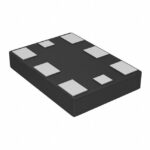 LMK61E0M-SIAT

The activity of extra discounts on wholesale prices is in full swing…
Please fill in your contact information and we will send you the latest wholesale price list.




