 ChipApex | Global Electronic Components Supplier

SEARCH
Search Product
Search Post
— IC芯片 | 连接器 | 传感器 | 被动器件 —
Search productSearch post
— IC芯片 | 连接器 | 传感器 | 被动器件 —
Consult the customer manager about the wholesale price.
consultation hotline:86-132-6715-2157
email:[email protected]
Contact the product manager for consultation. One-stop consultation is available.
Do you want a lower wholesale price? Please send us your inquiry and we will reply immediately.
The LMK61E2BBA-SIAT is an ultra-low jitter programmable oscillator from Texas Instruments, featuring a PLLatinum™ frequency synthesizer and integrated VCO. It supports output frequencies from 10 MHz to 1 GHz with configurable LVPECL, LVDS, or HCSL outputs. The device utilizes an internal EEPROM for factory-configured self-startup at 156.25 MHz LVPECL. Key electrical parameters include a maximum output frequency of 1 GHz, a jitter specification of 90 fs, and a supply voltage range of 3.135 V to 3.465 V. Operating current ranges from 136 mA (disabled) to 208 mA (active). It operates within a temperature range of -40°C to +85°C in an 8-QFM package.
Verify the specific suffix 'SIAT' against the manufacturer's official ordering guide to ensure correct packaging and tape/reel specifications. Confirm that the factory-configured frequency matches the design requirement, as this variant is pre-programmed. Check for any recent product change notices regarding pinout or thermal characteristics before finalizing procurement.
Select this component when ultra-low jitter performance below 100 fs is critical for system signal integrity. Ensure the application requires one of the supported differential output standards: LVPECL, LVDS, or HCSL. Consider the I2C programming capability if dynamic frequency adjustment or system-level timing margin testing is required during development.
This part belongs to the LMK61E2 family of ultra-low jitter programmable oscillators. It shares architectural similarities with other members like the LMK61E2-SIAT but differs in specific factory programming and potentially minor electrical tolerances. It serves as a direct replacement for fixed-frequency oscillators where programmability and lower jitter are needed.
Public confirmed substitute part numbers are not available in the provided documentation. Designers should consult the manufacturer's cross-reference tools for compatible alternatives within the same jitter class.
The device is factory programmed to generate a 156.25 MHz LVPECL output using settings stored in the on-chip EEPROM, allowing for immediate operation without external initialization.
While factory-configured for self-startup, the registers and EEPROM can be fully reprogrammed in-system via the I2C serial interface to support different frequencies and output formats.
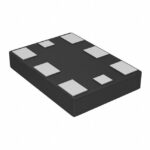 LMK61E2BBA-SIAT

The activity of extra discounts on wholesale prices is in full swing…
Please fill in your contact information and we will send you the latest wholesale price list.




