ChipApex | Global Electronic Components Supplier

SEARCH
Search Product
Search Post
Search productSearch post
Consult the customer manager about the wholesale price.
consultation hotline:86-132-6715-2157
email:[email protected]
Contact the product manager for consultation. One-stop consultation is available.
Do you want a lower wholesale price? Please send us your inquiry and we will reply immediately.
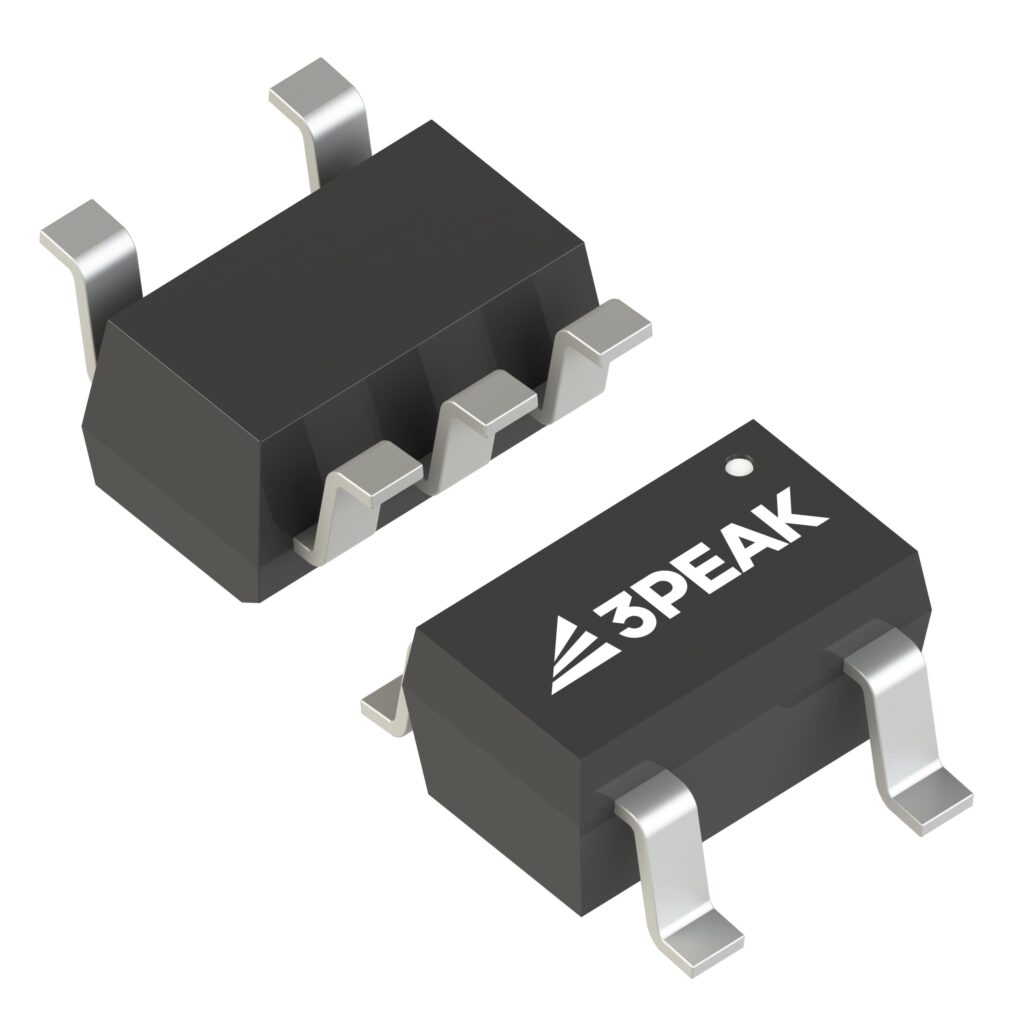
LMV321IDBVR-EV is listed in the Instrumentation, Op Amps, Buffer Amps range at ChipApex. The manufacturer field lists EVVO. Its product description is SOT23-5 OPERATIONAL AMPLIFIER RO. Review the specifications below when checking this part for your BOM.
The EVVO LMV321IDBVR-EV is a single-channel, low-power operational amplifier featuring rail-to-rail input and output capabilities. It operates within a supply voltage range of 2.1 V to 5.5 V with a typical quiescent current of 45 µA. The device provides a gain bandwidth product of 1 MHz and a slew rate of 0.52 V/µs. Key electrical characteristics include a typical input offset voltage of 0.8 mV, an input bias current of 10 pA, and a common-mode rejection ratio of 70 dB. It is housed in a space-saving SOT-23-5 package suitable for portable applications.
Verify the manufacturer designation 'EVVO' against official component databases, as this suffix may indicate a specific distributor or regional variant rather than a standard Texas Instruments part. Confirm the exact pinout and electrical tolerances match the required design specifications before integration. Ensure the SOT-23-5 package dimensions align with the PCB footprint. Request updated datasheets to validate the 2.1 V minimum operating voltage claim.
Select this component for designs requiring minimal power consumption and wide input/output voltage swings in single-supply systems. The extremely low input bias current makes it suitable for high-impedance sensor interfaces and integrators. Compare performance metrics such as offset voltage drift and noise density against alternative low-voltage op-amps to ensure compatibility with signal integrity requirements.
This device belongs to the LMV321 family of low-power, rail-to-rail operational amplifiers. It serves as a cost-effective solution for portable and battery-operated electronics where space and power efficiency are critical constraints. The single-channel configuration simplifies board layout compared to dual or quad variants while maintaining essential performance features like high open-loop gain and wide bandwidth.
Standard equivalents include the TI LMV321IDBVR and generic LMV321 variants from other manufacturers. Verify that replacement parts support the 2.1 V minimum supply voltage and maintain similar input bias current levels for high-impedance applications. Check package compatibility to ensure direct pin-for-pin substitution without PCB modifications.
The device supports a minimum working voltage of 2.1 V.
Yes, it features both rail-to-rail input and rail-to-rail output voltage swing capabilities.
The typical input bias current is 10 pA.
Explore related parts through Amplifiers, Linear, Integrated Circuits (ICs), all product categories.
 LMV321IDBVR-EV

The activity of extra discounts on wholesale prices is in full swing…
Please fill in your contact information and we will send you the latest wholesale price list.