 ChipApex | Global Electronic Components Supplier
SEARCH
Search Product
Search Post
— IC芯片 | 连接器 | 传感器 | 被动器件 —
Search productSearch post
— IC芯片 | 连接器 | 传感器 | 被动器件 —
Consult the customer manager about the wholesale price.
consultation hotline:86-132-6715-2157
email:[email protected]
Contact the product manager for consultation. One-stop consultation is available.
Do you want a lower wholesale price? Please send us your inquiry and we will reply immediately.
The LOG200RGTR is a high-speed precision logarithmic amplifier manufactured by Texas Instruments, designed for wide dynamic range current-to-voltage conversion. It features two logarithmic amplifiers and one high-precision differential amplifier within a single VQFN-16 package. The device operates on a single supply voltage ranging from 4.5V to 12.6V or dual supplies of ±2.25V to ±6.3V. Key electrical parameters include a maximum input bias current of 840nA, an input offset voltage of 840µV, and a power supply rejection ratio of 0.1mV/V. It supports a dynamic range of up to 160dB with a gain-bandwidth product of 60MHz and a slew rate of 22V/µs.
Verify the specific suffix 'RGTR' corresponds to the VQFN-16 surface-mount package and reel packaging format. Confirm that the component meets the required operating temperature range of -40°C to +125°C for your specific application environment. Ensure compatibility with single or dual power supply configurations as specified in the datasheet before finalizing procurement specifications.
Select this component when high-speed precision logarithmic amplification is required for current signals. It is suitable for applications demanding a wide dynamic range and fast transient response. Consider the VQFN-16 package size for space-constrained designs. Verify that the input current levels fall within the specified operational range for optimal logarithmic consistency and linearity performance.
The LOG200RGTR belongs to the LOG200 series of logarithmic amplifiers from Texas Instruments. This series is engineered for high-performance analog signal processing tasks. The RGTR suffix indicates the tape-and-reel packaging variant, facilitating automated assembly processes. The device is part of a broader portfolio of precision analog components designed for industrial and communication systems.
Public confirmed substitute part numbers are not available in the provided documentation. Evaluate alternative logarithmic amplifiers based on pin compatibility, dynamic range requirements, and package dimensions if substitution is necessary.
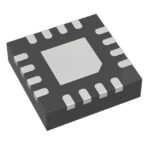 LOG200RGTR
The activity of extra discounts on wholesale prices is in full swing…
Please fill in your contact information and we will send you the latest wholesale price list.







