 ChipApex | Global Electronic Components Supplier
SEARCH
Search Product
Search Post
— IC芯片 | 连接器 | 传感器 | 被动器件 —
Search productSearch post
— IC芯片 | 连接器 | 传感器 | 被动器件 —
Consult the customer manager about the wholesale price.
consultation hotline:86-132-6715-2157
email:[email protected]
Contact the product manager for consultation. One-stop consultation is available.
Do you want a lower wholesale price? Please send us your inquiry and we will reply immediately.
The LP3907SQ-PJXIX/NOPB is a specialized power management integrated circuit (PMIC) manufactured by Texas Instruments. It integrates two synchronous buck converters and two low-dropout (LDO) regulators within a single package. The device features a 24-WQFN (4x4 mm) package with exposed pad for thermal dissipation. It operates over an extended temperature range from -40°C to +85°C. The component supports an input voltage range of 2.8V to 5.5V and includes an I2C interface for configuration. It is designed for applications requiring efficient power sequencing and regulation in compact form factors.
Verify the exact suffix PJXIX against the manufacturer's official datasheet to confirm pinout, thermal pad configuration, and specific electrical tolerances. Ensure the ordering part number matches the required package variant and temperature grade. Cross-reference with the latest Texas Instruments documentation to confirm RoHS compliance status and any recent design changes or lifecycle notices before finalizing procurement.
Select this component when a compact solution is needed for powering complex digital loads requiring multiple regulated rails. The integration of buck converters and LDOs reduces board space compared to discrete solutions. Consider the I2C controllability if dynamic voltage scaling or system monitoring is required. Verify that the input voltage range aligns with the system's primary power source and that the thermal performance of the WQFN package suits the enclosure constraints.
This part belongs to the LP3907 family of PMICs from Texas Instruments, designed for high-density power management. The 'SQ' designation typically indicates automotive-grade qualification or specific reliability standards, while 'PJXIX' defines the specific package type and tape/reel packaging. It serves as a central power controller for systems needing synchronized regulation of digital logic and analog circuits.
LP3907QSQ-JXIP/NOPB is a documented equivalent variant within the same family offering similar functionality with potential differences in temperature rating or specific output configurations. Verify pin-to-pin compatibility and electrical parameter alignment before substitution.
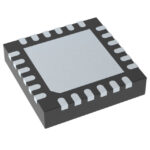 LP3907SQ-PJXIX/NOPB
The activity of extra discounts on wholesale prices is in full swing…
Please fill in your contact information and we will send you the latest wholesale price list.





