ChipApex | Global Electronic Components Supplier
SEARCH
Search Product
Search Post
— IC芯片 | 连接器 | 传感器 | 被动器件 —
Search productSearch post
— IC芯片 | 连接器 | 传感器 | 被动器件 —
Consult the customer manager about the wholesale price.
consultation hotline:86-132-6715-2157
email:[email protected]
Contact the product manager for consultation. One-stop consultation is available.
Do you want a lower wholesale price? Please send us your inquiry and we will reply immediately.
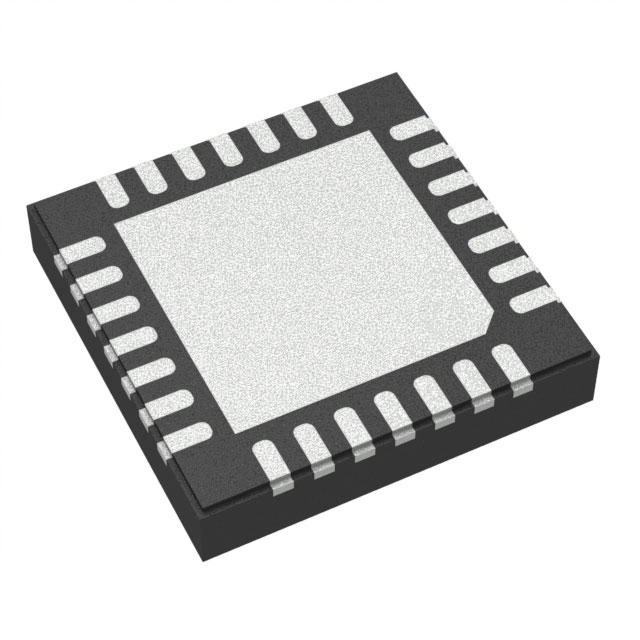
The LP87332BRHDTQ1 is an automotive-grade PMIC featuring two high-current buck converters and two low-dropout linear regulators. It operates within a 2.5 V to 5.5 V input range, supporting output voltages from 0.7 V to 3.36 V for the buck channels and 0.8 V to 3.3 V for LDOs. The device delivers up to 3 A per buck output and 300 mA per LDO output. Packaged in a 28-VQFN (5x5 mm) with wettable flanks, it supports I2C control and spread-spectrum clocking. Certified under AEC-Q100 standards, it functions reliably between -40°C and +125°C.
Verify the specific suffix 'B' against the official Texas Instruments datasheet to confirm the exact output current ratings and pin configuration, as variations exist within the LP87332 family. Ensure the order includes the RHDTQ1 designation to guarantee the 28-VQFN package type and automotive qualification status. Cross-reference the manufacturing site information provided in the product data sheet to confirm assembly location compliance with project specifications.
Select this component when designing for TDA3x processors or similar automotive applications requiring integrated buck and LDO solutions. The 2 MHz switching frequency offers a balance between efficiency and EMI performance. Consider the 28-VQFN footprint constraints during PCB layout. Verify that the required output currents align with the 3 A buck and 300 mA LDO limits defined in the electrical characteristics table of the manufacturer's documentation.
This part belongs to the LP8733 series of specialized power management ICs designed for automotive environments. It complements other devices like the LP873300 and LP873364 by offering a mixed topology of switching and linear regulation. The Q1 suffix indicates adherence to AEC-Q100 reliability standards, distinguishing it from commercial grade variants within the broader Texas Instruments portfolio.
LP87332FRHDRQ1 serves as a functional alternative within the same family, sharing the 28-VQFN package and automotive rating. Verify output current capabilities and specific feature sets against the datasheet before substitution.
 LP87332BRHDTQ1
The activity of extra discounts on wholesale prices is in full swing…
Please fill in your contact information and we will send you the latest wholesale price list.