ChipApex | Global Electronic Components Supplier
SEARCH
Search Product
Search Post
— IC芯片 | 连接器 | 传感器 | 被动器件 —
Search productSearch post
— IC芯片 | 连接器 | 传感器 | 被动器件 —
Consult the customer manager about the wholesale price.
consultation hotline:86-132-6715-2157
email:[email protected]
Contact the product manager for consultation. One-stop consultation is available.
Do you want a lower wholesale price? Please send us your inquiry and we will reply immediately.
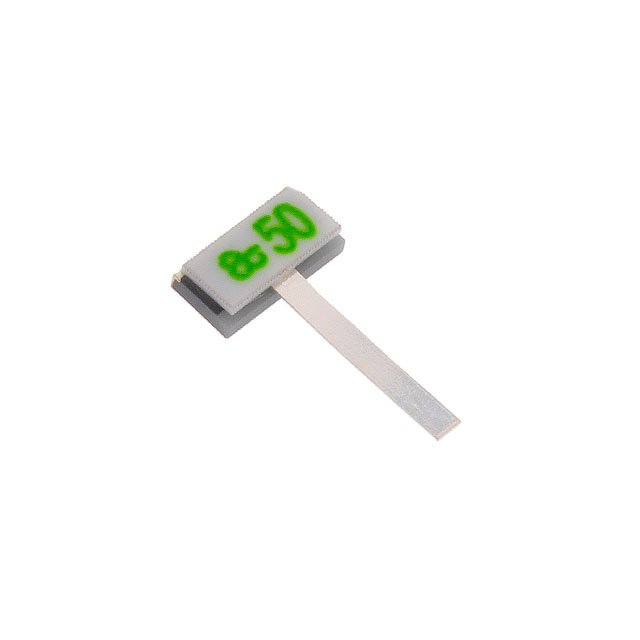
The LT11020T0050JBK is a high-frequency RF termination resistor manufactured by KYOCERA AVX. It features a nominal resistance of 50 Ohms with a tolerance of 5%. The component operates within a frequency range of 0Hz to 18GHz, making it suitable for ultra-wideband applications. It utilizes a 1020 package style and exhibits a temperature coefficient of 150 PPM/°C. The device supports an operating temperature range from -55°C to +150°C, ensuring stability across extreme thermal conditions.
Verify the specific datasheet version and manufacturer documentation to confirm current production status and compliance certifications. Ensure that the 1020 package dimensions align with your PCB footprint requirements. Cross-reference the 150 PPM/°C temperature coefficient against your system's thermal design specifications to guarantee long-term reliability under varying environmental conditions.
Select this component when a broadband RF load is required up to 18GHz. The 5% tolerance offers standard precision for general termination tasks. Consider the 1020 form factor for space-constrained designs. Evaluate the -55°C to +150°C operating range against your application's thermal profile to ensure the temperature coefficient remains within acceptable limits for your specific use case.
This part belongs to KYOCERA AVX's portfolio of high-frequency resistors designed for RF and microwave applications. These components are engineered to provide stable impedance characteristics across wide bandwidths. The LT series typically focuses on maintaining signal integrity in high-speed digital and analog circuits where precise termination is critical for minimizing reflections and ensuring accurate signal transmission.
Consult official KYOCERA AVX documentation for verified substitute part numbers. Ensure any replacement matches the 50 Ohm resistance, 5% tolerance, 1020 package, and 18GHz frequency limit. Verify compatibility with the -55°C to +150°C operating range and 150 PPM/°C temperature coefficient before integration.
 LT11020T0050JBK
The activity of extra discounts on wholesale prices is in full swing…
Please fill in your contact information and we will send you the latest wholesale price list.