ChipApex | Global Electronic Components Supplier

SEARCH
Search Product
Search Post
— IC芯片 | 连接器 | 传感器 | 被动器件 —
Search productSearch post
— IC芯片 | 连接器 | 传感器 | 被动器件 —
Consult the customer manager about the wholesale price.
consultation hotline:86-132-6715-2157
email:[email protected]
Contact the product manager for consultation. One-stop consultation is available.
Do you want a lower wholesale price? Please send us your inquiry and we will reply immediately.
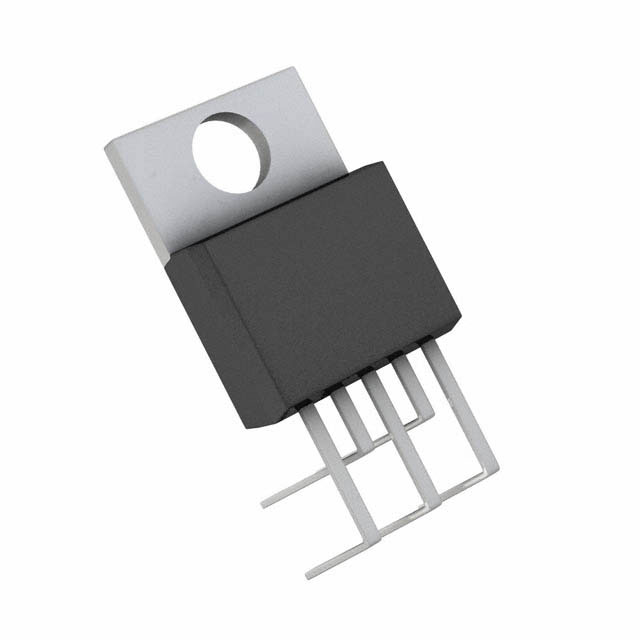
The LT1170CT#30PBF is a monolithic high-power switching regulator manufactured by Analog Devices Inc. It operates with an input voltage range of 3 V to 40 V and delivers an output current of 5 A, supporting up to 100 W of output power. The device features a fixed internal switching frequency of 30 kHz, as indicated by the suffix. It supports multiple standard topologies including buck, boost, flyback, forward, inverting, and Cuk configurations. The component includes a high-current, high-efficiency switch along with integrated oscillator, control, and protection circuitry.
Verify the specific suffix #30PBF against official Analog Devices documentation to confirm the 30 kHz fixed frequency specification, as this variant differs from other LT1170 versions with different frequencies or packages. Ensure compatibility with through-hole TO-220-5 mounting requirements. Cross-reference datasheet revisions for any updates to electrical characteristics or pinout definitions before finalizing procurement specifications.
Select this component when a fixed 30 kHz switching frequency is required for EMI filtering or transformer design constraints. Compare against LT1170 variants with different frequency suffixes if system noise profiles differ. Evaluate thermal performance in the TO-220-5 package against expected load currents and ambient temperatures. Confirm that the 40 V maximum input voltage aligns with the source supply rails.
The LT1170 series represents a family of monolithic high-power switching regulators from Analog Devices. These devices are designed for robust performance in various DC-DC conversion applications. The CT#30PBF designation identifies a specific grade and frequency variant within this lineup, distinguished by its 30 kHz operating frequency and through-hole packaging format compared to surface-mount alternatives.
LT1170CT#PBF and LT1170IT#PBF are listed as parameter-equivalent alternatives. Verify that the frequency specifications match the application requirements, as these counterparts may operate at different switching frequencies (e.g., 100 kHz). Ensure package compatibility and thermal characteristics are equivalent for direct substitution.
 LT1170CT#30PBF

The activity of extra discounts on wholesale prices is in full swing…
Please fill in your contact information and we will send you the latest wholesale price list.