 ChipApex | Global Electronic Components Supplier

SEARCH
Search Product
Search Post
— IC芯片 | 连接器 | 传感器 | 被动器件 —
Search productSearch post
— IC芯片 | 连接器 | 传感器 | 被动器件 —
Consult the customer manager about the wholesale price.
consultation hotline:86-132-6715-2157
email:[email protected]
Contact the product manager for consultation. One-stop consultation is available.
Do you want a lower wholesale price? Please send us your inquiry and we will reply immediately.
The LT1172CT#06PBF is a monolithic high-power switching regulator manufactured by Analog Devices Inc. It operates with an input voltage range of 3 V to 60 V and provides an adjustable output voltage with a maximum output current of 1.25 A. The device supports multiple standard switching topologies, including buck, boost, flyback, forward, inverting, and Cuk configurations. It integrates a high-current, high-efficiency internal switch along with complete oscillator, control, and protection circuitry on the die. The component functions within a temperature range of 0°C to +100°C and utilizes a SO-8 package.
Verify the specific suffix #06 against official Analog Devices documentation to confirm exact marking or tape-and-reel specifications. Ensure the selected variant matches the required thermal performance and packaging constraints for the target PCB layout. Cross-reference the manufacturer part number with authorized distributors to confirm current availability and authenticity before procurement.
Select this component when a single IC solution is required for multiple topology implementations without external power switches. The integrated protection features simplify design complexity compared to discrete solutions. Consider the 1.25 A output limit and 60 V input ceiling to ensure suitability for the specific power requirements. Evaluate thermal management needs based on the SO-8 package and expected load conditions.
This part belongs to the LT1172 series of high-power switching regulators. The series is characterized by its ability to function in various standard converter modes using a single chip architecture. The LT1172 family is designed to replace discrete transistor-based designs, offering improved reliability and reduced board space through integrated control and power stages.
LT1172CSW#PBF
The device supports buck, boost, flyback, forward, inverting, and Cuk configurations.
No, it includes a high-current, high-efficiency switch and all oscillator, control, and protection circuitry on the die.
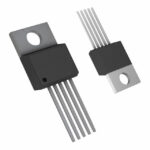 LT1172CT#06PBF

The activity of extra discounts on wholesale prices is in full swing…
Please fill in your contact information and we will send you the latest wholesale price list.





