 ChipApex | Global Electronic Components Supplier

SEARCH
Search Product
Search Post
— IC芯片 | 连接器 | 传感器 | 被动器件 —
Search productSearch post
— IC芯片 | 连接器 | 传感器 | 被动器件 —
Consult the customer manager about the wholesale price.
consultation hotline:86-132-6715-2157
email:[email protected]
Contact the product manager for consultation. One-stop consultation is available.
Do you want a lower wholesale price? Please send us your inquiry and we will reply immediately.
The LT1339CSW#PBF is a high-power synchronous current-mode switching regulator controller manufactured by Analog Devices Inc. It is designed to drive dual N-channel MOSFETs in a single integrated circuit solution, specifically optimized for synchronous buck (step-down) converter topologies. The device operates with a supply voltage range of 9V to 60V and supports a fixed switching frequency of 150kHz. Key electrical parameters include a maximum duty cycle of 90% and a single output configuration. The component is housed in a 20-pin SOIC Wide (WSOIC-20) surface-mount package, ensuring compatibility with standard PCB layouts for industrial power applications.
Verify the specific suffix #PBF confirms lead-free compliance and RoHS status prior to ordering. Confirm that the WSOIC-20 package dimensions match your PCB footprint requirements. Check the manufacturer's lifecycle status as this part may be classified as obsolete or restricted in certain regions. Ensure thermal management strategies align with the package's dissipation capabilities under expected load conditions.
Select this controller when a dedicated synchronous buck solution is required without external driver ICs. It is appropriate for designs needing a fixed 150kHz frequency and operation up to 60V input. Consider alternative models if variable frequency control or lower input voltage ranges are necessary. Evaluate the 90% duty cycle limit against the minimum off-time requirements of the target application.
The LT1339 belongs to Analog Devices' family of high-power switching controllers. Unlike low-power PWM controllers, it integrates the gate drive stage, reducing component count and board space. This integration distinguishes it from separate driver and controller combinations, offering a compact solution for medium-to-high current DC/DC converters.
Public confirmed substitute part numbers are not available in the provided documentation. Verify compatibility with existing design specifications before considering any cross-reference components.
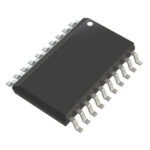 LT1339CSW#PBF

The activity of extra discounts on wholesale prices is in full swing…
Please fill in your contact information and we will send you the latest wholesale price list.





