 ChipApex | Global Electronic Components Supplier

SEARCH
Search Product
Search Post
— IC芯片 | 连接器 | 传感器 | 被动器件 —
Search productSearch post
— IC芯片 | 连接器 | 传感器 | 被动器件 —
Consult the customer manager about the wholesale price.
consultation hotline:86-132-6715-2157
email:[email protected]
Contact the product manager for consultation. One-stop consultation is available.
Do you want a lower wholesale price? Please send us your inquiry and we will reply immediately.
The LT1534IS#TRPBF is a high-efficiency, ultralow noise synchronous boost switching regulator manufactured by Analog Devices Inc. It operates with an input voltage range of 2.7 V to 23 V and delivers a continuous output current of 2 A. The device features an adjustable output voltage and supports a programmable switching frequency between 20 kHz and 250 kHz. Packaged in a 16-lead SOIC (SOIC-16) for surface mount installation, it includes a shutdown pin for power management. The component functions within a temperature range of -40°C to +125°C.
Verify the specific suffix #TRPBF indicates tape-and-reel packaging when sourcing. Confirm the IS grade matches required industrial temperature specifications. Ensure compatibility with existing PCB footprints for the SOIC-16 package. Validate that the 2 A output current meets the target application load requirements before finalizing procurement decisions.
Select this component when ultralow noise performance is critical alongside high current delivery. The wide input voltage range allows flexibility in battery or single-supply designs. Consider the adjustable switching frequency to optimize the trade-off between efficiency and external component size. Verify that the synchronous topology aligns with thermal constraints compared to non-synchronous alternatives.
This part belongs to the LT1534 family of ultralow noise switching regulators from Analog Devices. It serves as a boost converter solution, contrasting with buck variants in the same series. The IS designation denotes industrial temperature rating capabilities. It complements other linear and switching power management ICs offered by the manufacturer for complete system power solutions.
Check for direct equivalents such as the LT1534-1 if different pin configurations are acceptable. Evaluate alternative boost regulators from other manufacturers only if electrical parameters like noise and current capacity are strictly matched. Ensure any substitute maintains the SOIC-16 footprint or requires design modification.
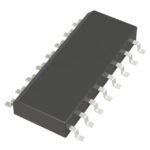 LT1534IS#TRPBF

The activity of extra discounts on wholesale prices is in full swing…
Please fill in your contact information and we will send you the latest wholesale price list.





